
WOWWBLOG #56: When the Nest Empties, the Heart Expands: Finding Joy in the Family We Are Becoming
How three children, six Pomeranians, and a 93-year-old father taught me that family is not a structure—it's a practice
WHAT: The Magic of Gathering
When family comes together, something magical happens.
At 67, I still await the grace of having grandchildren—though I suspect my six "grand-poms" are already softening me up for that role. Yet when we gather, nuclear and extended, I feel an inexplicable joy in our connectedness. My children are all grown now. I am experiencing a sort of "empty nest"—but family version 2026.
I realize that keeping a family bonded is a co-creative effort. It cannot be parents alone who set conditions for connection. The conditions must allow each member to sense how the family system is supporting them—so that being seen, heard, and cared for becomes real for each person and for the whole.
When I watch my children relate to each other—Ro, the strategic communicator; Asia, the Spotify partner; Amico, the cycling vlogger who also works with me—I see three distinct orbits, yet all held by the same gravitational pull. And then there is my 93-year-old father, Gil, who is quietly happy amidst the noise and laughter, grounding us in the truth that love outlasts everything.
SO WHAT: The Family We Are Becoming
Our family looks different from the ones our parents knew. Research confirms this: the dynamics, constitution, and functions of families have changed rapidly as we enter the first quarter of the 21st century . Major demographic shifts—increasing longevity, declining fertility, evolving marriage trajectories—have influenced the size and structure of families . Older adults today are more likely to age without children, experience gray divorce, navigate stepfamily ties, or engage in transnational caregiving .
But amid all this change, the core remains: family is a practice, not a structure.

In our home, that practice includes our six Pomeranians—Mochiquita, Miloquito, Matcha Anicca, Metta Mae Mae, Maki Samadhi, and Miso Bunso—each with their own quirks and personalities. We know them intimately. They love us unconditionally. And in loving them, we radiate that love outward—to our plants, the trees in the backyard, the grass beneath which other family pets are buried, the whole earth, and then to the community and society we inhabit, no matter how frail, fragmented, or grace-deprived it may feel.
Anicca. Everything changes. And it is precisely that awareness that keeps us from drifting apart. If we are not aware of ourselves and others in our lives who matter most, we might find ourselves living with "strangers"—gathering only for milestones, celebrating perfunctorily.
So even when family and friends rib me about how I "structure" our gatherings, I don't mind. We check in using vision boards, ikigai, lego bricks, Hue Are You?, or other symbolic tools. We still have fun. We still deeply connect with each other's realities. And most importantly, we listen to each other, see and appreciate each other with genuine compassion—no advising at all, just demonstrating with purposiveness and intentionality that we are here for each other no matter what.
The empty nest is not an absence. It is a new container—one we must learn to fill with presence rather than obligation.
NOW WHAT: The Family We Tend Together
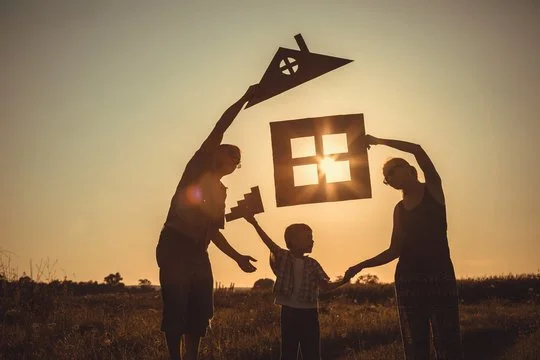
Empty nesting can be a perilous time. Studies show the rate of gray divorce has roughly doubled since the 1990s . Some couples emerge from the transition unscathed; for others, it becomes a coup de grâce . The shedding of dependents has a way of concentrating the mind on what you lack . But we can choose differently.
For our family, the practice is simple. It is not about perfection. It is about presence.
Here is how we tend our family system. You might try these too:
1. Use "Containers" for Connection
· Why: You don't need a perfect plan for your gatherings. But having some simple structure helps the family listen to each other's realities. Our symbolic tools—vision boards, Hue Are You?—are not just activities; they are rituals that help us see each other.
· Action: At your next family gathering, bring one simple question or tool. Ask: "What is one thing you are grateful for today?" That is a container.
2. Embrace Technology for Presence
· Why: If some family members live far away, Facetime or video calls can help maintain connection—not as a substitute, but as a bridge. My daughter Asia lives in BGC; we keep in touch through videoconference.
· Action: Schedule regular virtual check-ins. Make them intentional. And if you can, bring your devices into the shared space as tools for presence, not distraction.
3. Redefine the "Empty Nest"
· Why: The transition to an empty nest can be a time of reconnection and personal growth, but also confusion and detachment. Don't wait for the shift to happen to you; prepare for it .
· Action: Begin to invest in roles beyond parenting—work that matters, creative outlets, friendships, learning. This will help prevent an identity collapse when your parenting role begins to reduce . We invite you to be part of a life-long learning community in TLC!
4. Practice "Letting Be"
· Why: Allowing children increasing independence before they leave helps loosen emotional over-identification . This is not withdrawal from parenting; it is healthy evolution.
· Action: Let your children make their own choices, even when you disagree. This allows them to become their own people—and allows you to become more fully yourself.
5. Include the Whole Family (Including the Furry Ones)
· Why: Our six Pomeranians are part of our system. They teach us unconditional love and presence. Including them in our rituals keeps the container soft, safe, and alive.
· Action: If you have pets, include them in your family gatherings. They are part of your Kapwa—the recognition of a shared self.
6. Start a Family Tradition
· Why: Family reunions are get-togethers that foster recurring, patterned interactions among family members . They reinforce social webs, identity, and shared beliefs .
· Action: Create a small tradition—a weekly dinner, a monthly virtual call, an annual trip. It doesn't have to be grand. It just has to be consistent.
A Closing Word
As my father Gil always says, "Life is too short and fragile to spend worrying and fretting about what's not working."
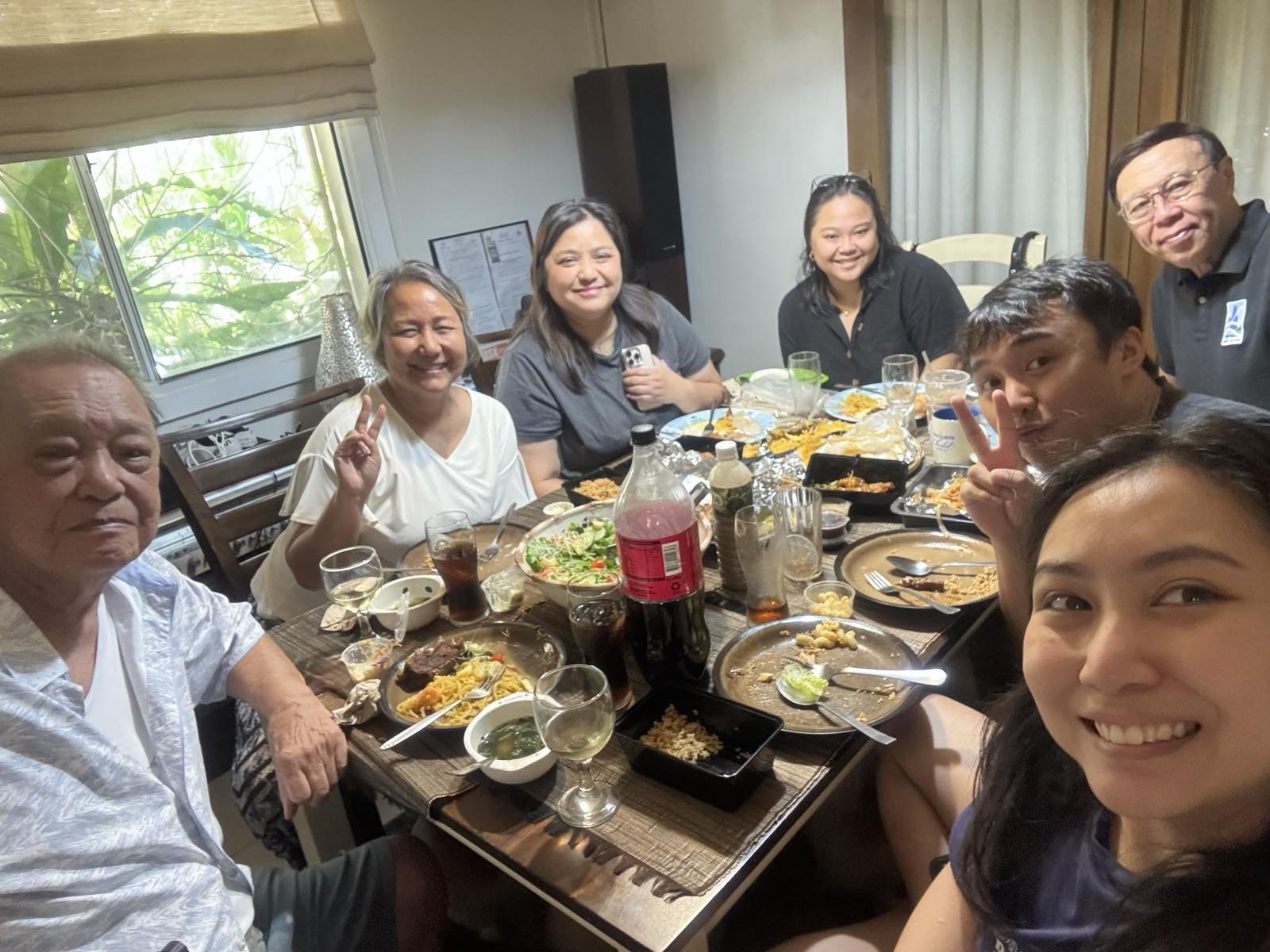
So we look inward and outward—not for things, but for experiences, for moments we are grateful for. And somehow, we know without words who we are, how we are not alone, and why we are here.
Family is not a static structure. It is a practice of presence. And in that practice, there is always room for joy.
🌷🌷🌷🌷🌷
-Susan Grace Rivera
Posted on: June 21, 2026