How three simple rules can help us find our way—even when the world feels like it's spinning apart
WHAT: The Invitation to See Differently
On June 24, I was invited to speak at an "OD Conversation" hosted by the OD Philippines Network. About 42 practitioners gathered virtually—consultants, HR leaders, change agents—all of us feeling the same thing: the ground is shifting beneath our feet.
I shared foundational seed practices from Human Systems Dynamics (HSD) —a lens that helps us see, understand, and shape thriving systems in the midst of complexity.
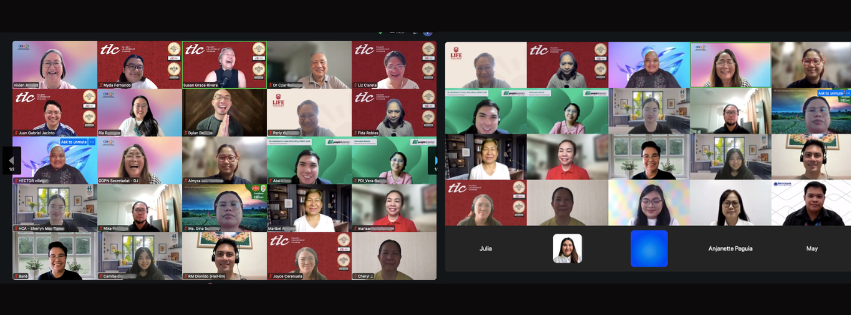
The response was warm, though I suspect some found my opening unusual. I didn't start with theory. I started with Heather Houston's music—"Breathe in the air"—and a brief guided mindfulness practice. Then I showed up as my true self: imperfect, a person with a voice disorder, the farthest from performative.
I began by naming what we all know: the mega poly-crises of our time—AI, climate, geopolitical tensions, economic uncertainty—are dynamical. Causes and effects are so convoluted that traditional problem-solving no longer works. Einstein was right: "You cannot solve problems with the same consciousness that created them."
I shared HSD's core tools:
· Adaptive Action (What? So What? Now What?) to navigate uncertainty without needing to know everything.
· The CDE Model (Container, Differences, Exchanges) to decode the hidden dynamics of any group or collective.
· The Stance of Inquiry—giving ourselves permission not to know, and still act with courage.

Then, a few days later, I found myself reading the World Economic Forum's Summer Davos update from Dalian, China. The headlines: trade wars, AI races, youth unemployment, the energy transition. And the line that cut deepest—from a young Global Shaper from Jamaica: "We have stopped having children. We have stopped buying homes."
I felt my chest tighten. This is the world my children—Ro, Asia, Amico—are inheriting.
SO WHAT: The Difference That Energy Lives In
Here is what I am learning.
In HSD, difference is where the energy lives. Too little difference, and a system stagnates. Too much, and it overwhelms. The work is not to eliminate difference, but to channel it.
In the OD conversation, we practiced this. We named patterns. We explored containers (the boundaries that hold us), differences (the tensions that fuel us), and exchanges (the flows that transform energy into action). We saw how tight containers can choke innovation, how large differences can cause conflict, how weak exchanges can block critical data.
This is exactly what I saw in the WEF article: the tension between shock and opportunity, overcapacity and underconsumption, scale and safety. China's 15th Five-Year Plan is built on "new quality productive forces." The IMF argues renewables now make sense on price alone. The IEA projects data centers will double their electricity draw by 2030. And through it all, the question of youth—a generation that has stopped having children and stopped buying homes—hovered largely unaddressed.
What do we do with this tension?
The answer, I think, lies in a different kind of intelligence—one that is not about control, but about dancing with complexity.
This is where the starling murmuration comes in.
NOW WHAT: The Murmuration as Our Guide
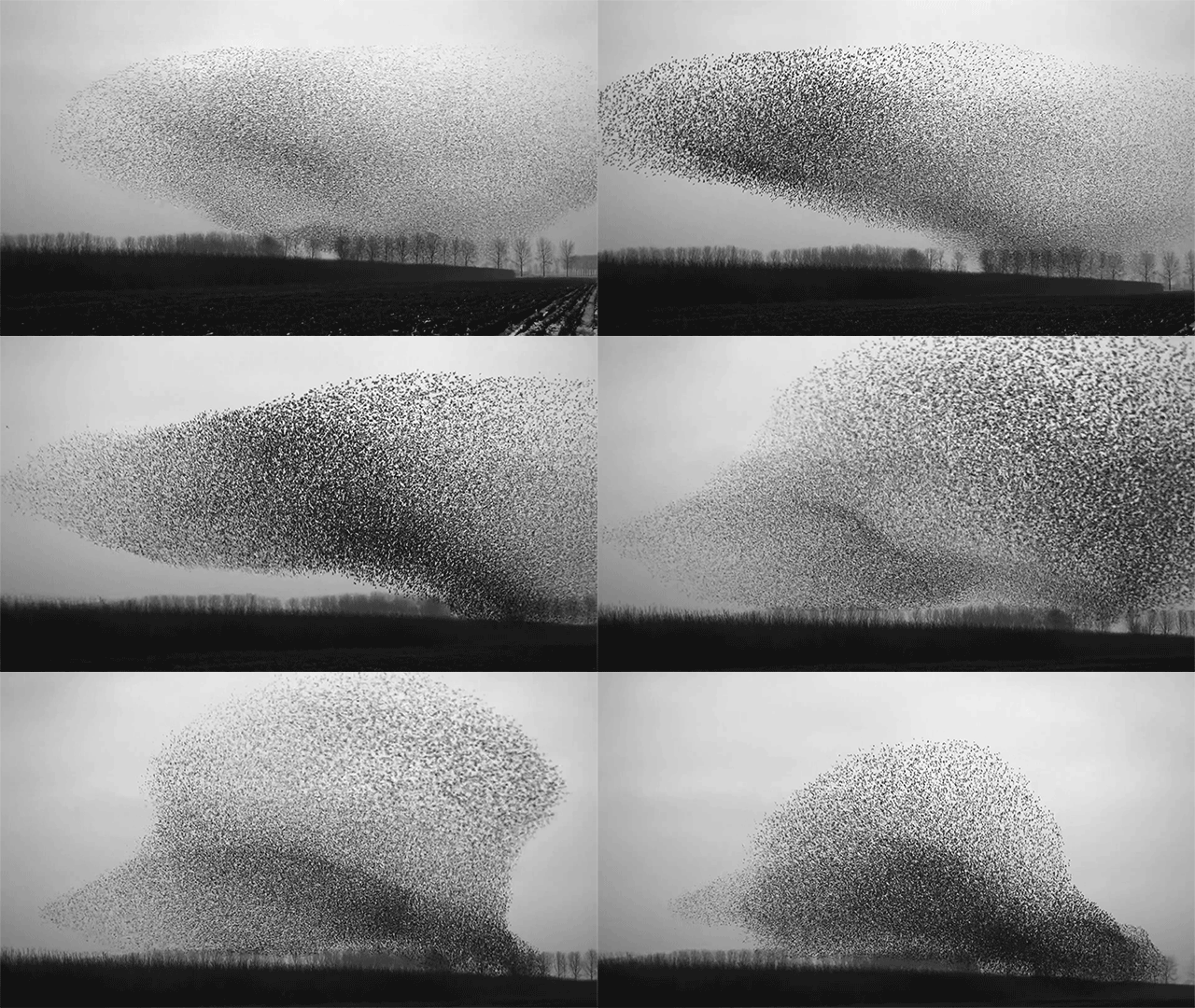
Craig Reynolds, a computer scientist, coded three simple rules in 1987 to simulate how starlings move as a single organism without a leader:
1. Separation (Avoidance): Don't bump into your neighbors.
2. Alignment: Match the speed and direction of your closest neighbors.
3. Cohesion (Attraction): Stay clustered together.
These three rules create a murmuration—a dynamic, adaptive, self-organizing system that confuses predators without central direction. Thousands of birds moving as one. No CEO. No command-and-control. Just local interactions that create global coherence.
These same rules speak to the CDE model:
· Separation is the Difference that keeps us from total conformity. It ensures we maintain unique perspectives—the empty space between us that allows for creativity.
· Alignment is the Exchange of high-speed information. Starlings track exactly seven immediate neighbors. When one turns, the ripple moves through the whole flock in milliseconds.
· Cohesion is the Container—the behavioral boundary that holds the system together, even when a predator attacks. The flock flexes, twists, but stays intact.
This is how we thrive in chaos and complexity. Not by eliminating differences, but by creating the conditions for healthy exchanges within a shared container.
Your Call to Action: Three Questions for the Second Half of 2026
As we enter July, the mid-point of the year, I invite you to apply these three simple rules to your own life and work.
1. Separation (Differences): What are you holding onto that is no longer serving you?
· Action: Identify one belief, habit, or commitment that creates more friction than flow. Give yourself permission to release it—or at least examine it with fresh eyes.
· Why: Too much sameness (too few differences) leads to stagnation. The right kind of separation allows for innovation.
2. Alignment (Exchanges): Who are your "seven neighbors"?
· Action: Identify the seven people most critical to your well-being and effectiveness. Reach out to one of them this week—not to ask for anything, but to check in. Strengthen the exchange.
· Why: The most effective systems are not connected to everyone; they are deeply connected to a few. Your local interactions shape the whole.
3. Cohesion (Container): What holds you together when the world is fracturing?
· Action: Name one value, relationship, or practice that anchors you. Write it down. Place it where you will see it daily. Let it be your container.
· Why: Without cohesion, we scatter. Without container, we lose identity. Cohesion is not rigidity; it is the boundary that allows for graceful movement.
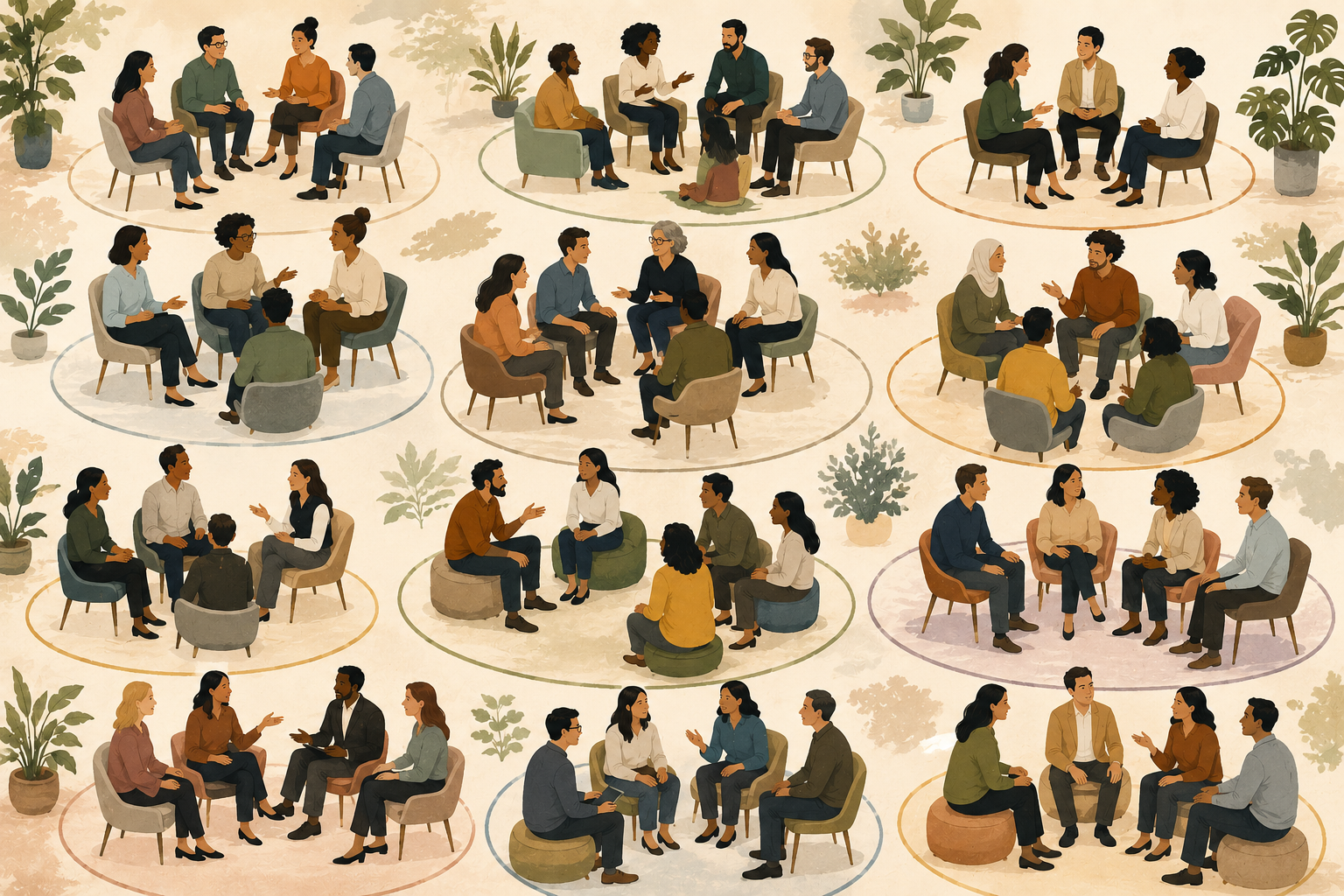
And if you are an OD practitioner, HR leader, or change agent—someone who holds the container for others—I invite you to a deeper conversation.
Let's gather. Let's practice this dance together. Let's explore how we can create conditions for people to thrive—even when the world feels like it's spinning apart.
What patterns are you seeing in your system? What one small shift in Container, Differences, or Exchanges could create a different pattern? Share below.
-Susan Grace Rivera
Posted on: June 29, 2026