BOWWBLOG #47: When the Voice Trembles, the Soul Speaks: What My Spasmodic Dysphonia Taught Me About Real Power
How a "broken" voice became my most unexpected teacher—and why I started TINIG so no one has to walk this path alone
WHAT: The Diagnosis That Felt Like a Sentence
It began quietly. Sometime in 2021, after a bout of flu, my voice didn't fully return. Hoarseness lingered. Then came the tremors—a subtle wobble when I spoke, a feeling that my larynx had a mind of its own. By 2023, I described it to my neurologist: the deteriorating quality, the "no-no" tremors in my neck. He referred me to a movement disorder specialist, who sent me to an otolaryngologist. After tests, the diagnosis came: Adductor Spasmodic Dysphonia (SD).
In simple terms: my vocal cords were spasming involuntarily, interrupting the flow of my voice. It is a neurological condition, not a cold. It has no cure. Only management—through regular Botox injections into the larynx, every three to four months, at significant cost.
The first injection was nerve-wracking. The procedure felt imprecise, almost unsure, so I simply had to trust my healthcare provider. And the price? Almost ₱60,000—with only part covered by my HMO. Even with appeals for discount, out of pocket still we t up to Php40K. The vial of Botox is expensive, and even if only one or two units are used, the whole vial is opened. I asked my laryngologist about a support group. He knew none. I asked my speech-language pathologist (whose ₱1,800 per session is not covered by Philcare, though other HMOs like Medicard do cover it). Nothing.
So I did what I had to do: I stretched the interval between injections to 7-8 months, enduring the gradual loss of my voice, because the cost was simply too high.
I also asked my doctor if he could aggregate demand among his SD patients—coordinate schedules so we could share a vial, lower the cost. I felt the request was too much of a chore.
SO WHAT: The Body Is Not Broken—It Is Teaching
For a consultant, coach, and community connector, losing the reliability of my voice might seem like a career-ending challenge. And for a while, I feared exactly that.
But something unexpected happened. My decades of mindfulness and meditation practice—the "just sitting," the breath awareness, the compassionate observation—had been quietly preparing me for this moment.
I began to listen differently. Not to the tremors as failures, but to what my body was trying to say. I also did my own study reading journals, watching youtube videos, which led me to text-to-speech technology apps, and joining Dysphonia International Support Groups gave me renewed hope and vigor!
· Physiologically, I learned that SD is a dystonia—a neurological movement disorder where my brain sends faulty signals to my vocal cords. It is not my fault. It is not weakness. It is simply a different wiring.
· Psychologically, I had to confront the internalized ableism that equates fluency with competence. The fear of speaking in public. The self-consciousness when my voice cracks mid-sentence. The shame of being perceived as nervous or unprepared when my body is simply doing what it does.
· Spiritually, the condition forced me to slow down. To listen more than I speak. To find power in presence rather than volume. To realize that the truest authority I carry is not in the smoothness of my words, but in the silence and stillness from which they emerge.
· Professionally, I discovered a paradox: in a world that rewards loud, fast, fluent voices, my quieter, harder-won words may carry more weight—because they are chosen, not automatic. Because they come from a place of embodied presence.
· Embodied Intelligence became my liberation. My body is not broken. It is a different kind of teacher—one that demands I show up authentically or not at all.
This is what I want every reader to understand: your body is speaking to you, all the time. The question is not whether you have a "perfect" body. The question is whether you are willing to listen.
NOW WHAT: No One Should Navigate This Alone
I decided that if no support group existed for Filipinos with voice disorders, I would start one.
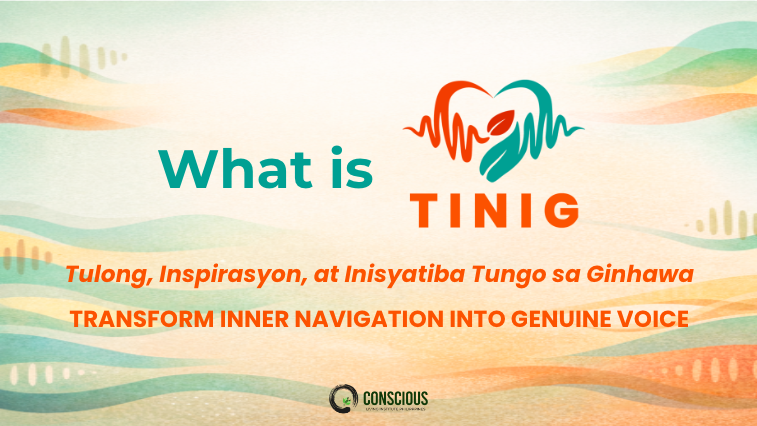
Together with a client— Tyron “Cas” Casumpang, who also has a form of SD - now a friend, we launched TINIG on April 16, 2026, World Voice Day.
TINIG carries a dual meaning:
· In Filipino: Tulong, Inspirasyon, at Inisyatiba Tungo sa Ginhawa — Help, Inspiration, and Initiative Toward Wellbeing.
· In English: Transform Inner Navigation Into Genuine Voice.
Our mission is simple: no one should navigate a voice disorder alone. We offer bi-monthly Kamustahan (check-in) sessions on Zoom—a warm, safe space to share stories, ask questions, and simply be with others who understand.
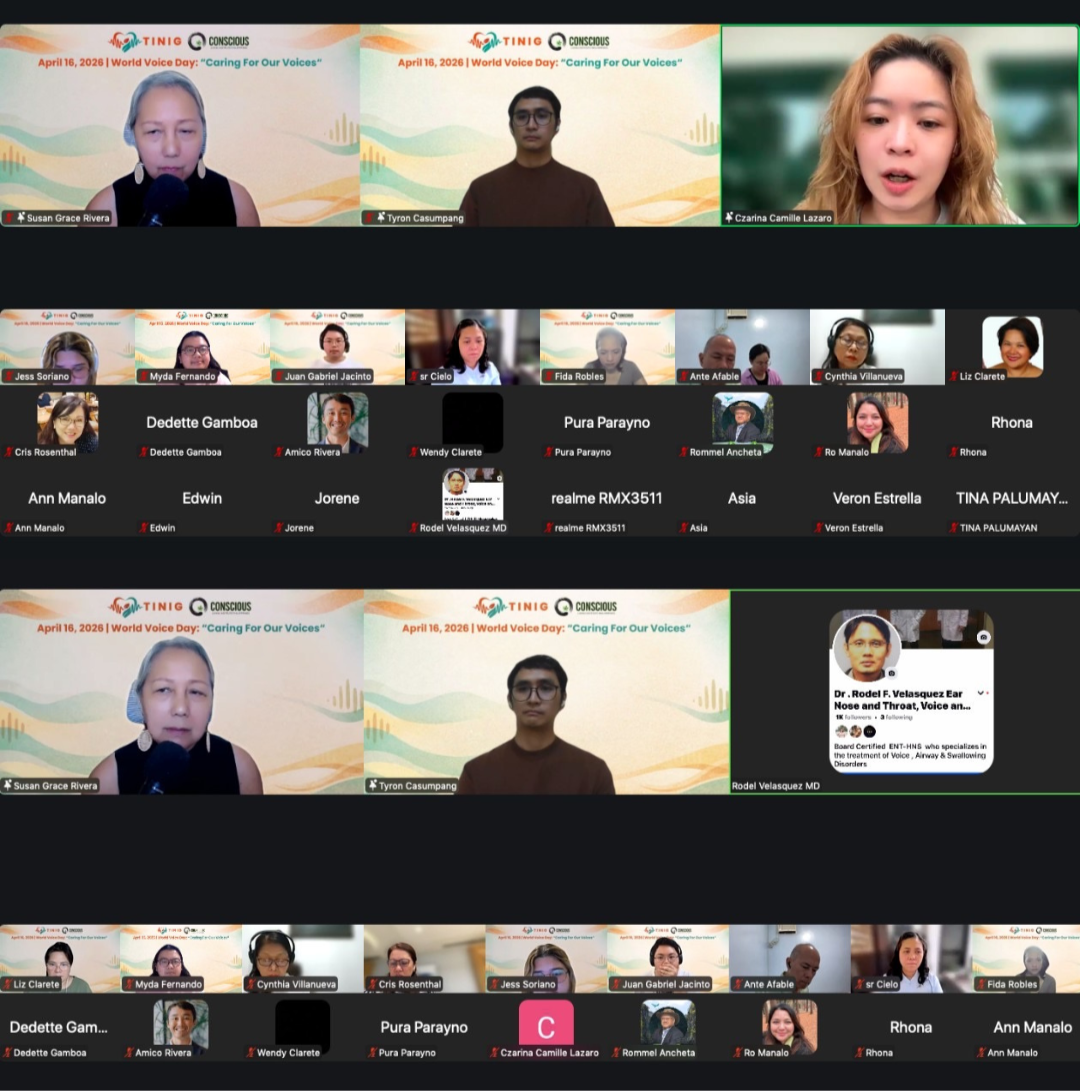
We were blessed to have Dr. Rodel Velasquez, a compassionate otolaryngologist, join us as an expert resource. He actively helps patients share Botox vials to reduce costs. We also had my speech-language pathologist, Ms. Czar Lazaro, deliver a talk. Thirty-one people attended—small, but for me, it was everything.
Your Call to Action: Three Ways to Listen to Your Body—and Support Others
You may not have a voice disorder. But every body speaks. Here is how you can start listening—and how you can help those whose voices are struggling to be heard.
1. Do a "Body Check-In" Today (5 minutes)
· Sit quietly. Close your eyes. Scan from the top of your head to the tips of your toes. Notice any area that feels tight, numb, achy, or simply "different." Do not judge. Just notice.
· Ask: "What is this sensation trying to tell me?" Rest, water, movement, a pause, a boundary? Let the answer arise without forcing it.
· Why: Your body is constantly communicating. Most of us are too busy to listen. This five-minute practice is the beginning of embodied intelligence.
2. If Your Voice Is Struggling, Know You Are Not Alone
· If you or someone you love has hoarseness, tremors, vocal fatigue, or any persistent voice change, seek a proper evaluation from an otolaryngologist (ENT). Spasmodic dysphonia is rare but real. You deserve answers.
· Join a community. TINIG welcomes you. Our bi-monthly Kamustahan is free, confidential, and open to anyone navigating a voice disorder—and to their families and caregivers.
· To connect with TINIG, email sg.rivera@thetlcsolution.com or visit tinig.asia. Join our TINIG Community Facebook Group.
3. Be a Compassionate Listener for Someone Whose Voice Is Different
· If you encounter a colleague, client, or family member whose speech is halting, breathy, or tremulous, do not finish their sentences. Do not look away. Do not assume nervousness or intoxication.
· Simply be present. Wait. Listen to their words, not their fluency. Let them know: "I hear you. Take your time."
· Why: The most healing gift you can give is the patience to receive someone's authentic voice—in whatever form it comes.
I still get Botox injections. My voice still trembles. Some days, I still feel the fear. But I no longer feel alone.
And I have learned something that no smooth, fluent voice could ever teach me: real power is not the absence of tremor. It is the courage to speak anyway.
Your body is not broken. It is a teacher. Are you ready to listen?
Your Turn: Have you ever felt your body trying to tell you something you were too busy to hear? Share one small insight in the comments—or, if you are navigating a voice disorder, reach out to TINIG. You are not alone.
🌷🌷🌷🌷🌷
-Susan Grace Rivera
Posed on: April 19, 2026