
WOWWBLOG #61: The Gift That Cannot Be Counted: Why Offering Mindful Movement for Free Is Revolutionary
WHAT: A Saturday of Small, Sacred Attendance
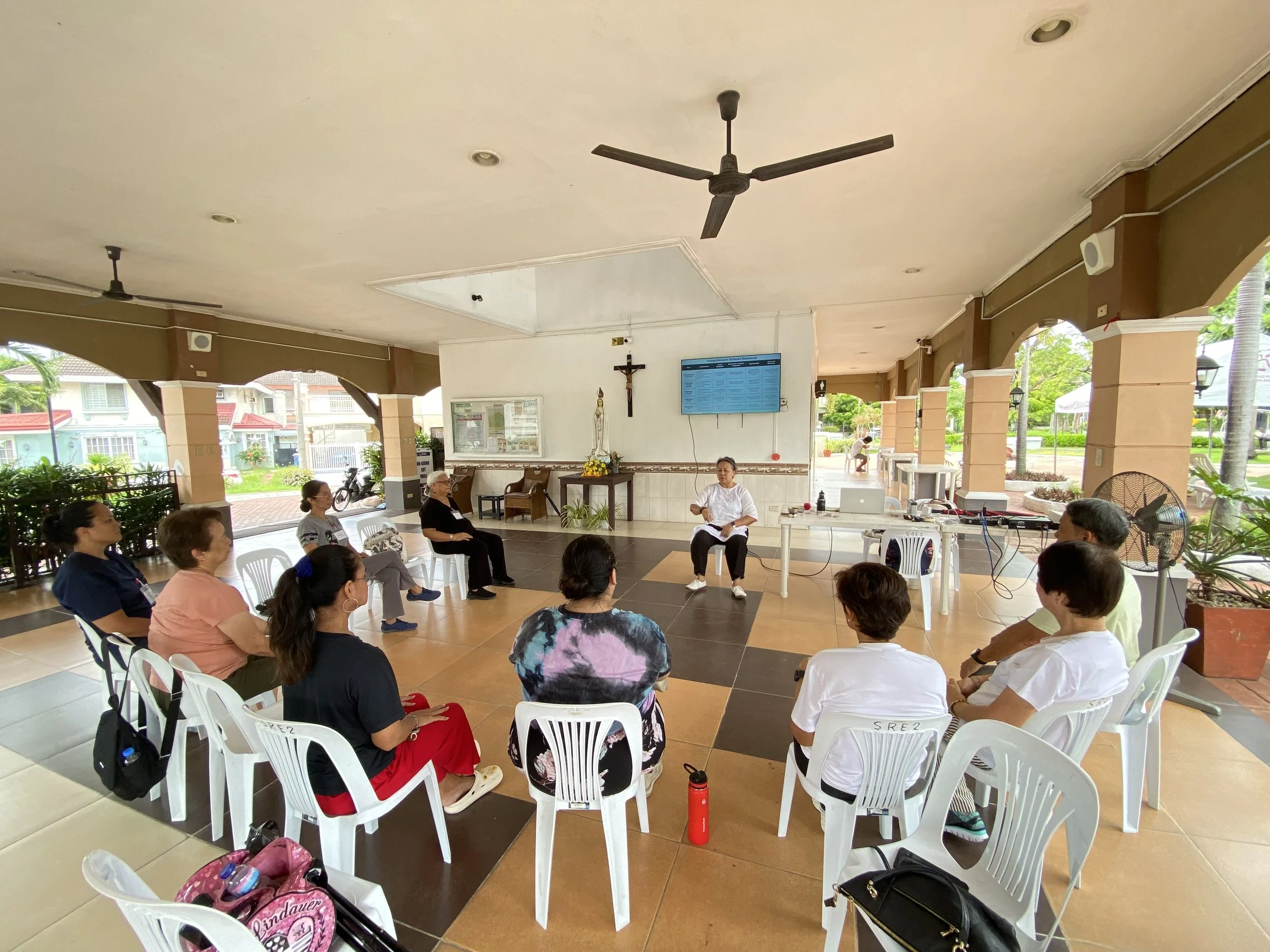
Today was special.
Ten people—from the original 34 who signed up for our Mindful Movement Training Program—showed up for the second of four two-hour sessions. In the first session, 24 had attended. Now, 10 remained.
It would be easy to focus on the numbers. To feel disappointed. To wonder if the effort is worth it.
But I know something about this work.
I have been practicing Tai Chi Qigong Shibashi since 1985, when I trained under Sister Marimil Lobregat, a Religious of the Good Shepherd, under a "Care for Carers" program. She knew that people who serve others are prone to burnout. She offered this gentle, flowing practice as a form of self-care.
I would not have survived the onslaught of stressful and challenging events in my life had it not been for my daily discipline of meditation and mindfulness practices. So here I am paying it forward.
Seated meditation—Shikantaza, or "just sitting" in the Zen tradition—has been my anchor. Upright posture. Half-open eyes. Alert, non-judgmental awareness. It is often described as "like going to the gym." A daily workout that in itself becomes the pure practice of presence, which I carry with me into the rest of my day.
It is very much like Centering Prayer—the rich Christian contemplative heritage where prayer is relationship with God, where I sit with no expectations, resisting no thought, retaining no thought, reacting emotionally to no thought. When I notice myself entangled, I return ever so gently to my sacred word—the symbol of my full intention to consent to Divine presence and action, moment by moment.
Because these practices have been transformative in my own life, teaching Shibashi has become my advocacy.
I offer it completely free, under the auspices of The TLC Solution's Conscious Living Institute Phils (CLIPH) . While we welcome Dana—donation in cash or kind—I find that offering it freely removes the commercial and transactional nature of the relationship. It becomes a co-creative process of weaving relationships: within ourselves, with each other, with nature, and with the cosmos.

As Thich Nhat Hanh taught: "We inter-are."
SO WHAT: The Revolution of Giving Without Counting
When I offer Shibashi for free, something shifts.
· The recipient is no longer a "client" buying a service, but a person receiving support within a human relationship.
· The teaching is offered in response to a need, not because a fee has been paid.
· The model is inclusive—accessible to everyone, regardless of ability to pay.
· The relationship is built on trust, shared humanity, and compassion.
And here is the beautiful paradox: in giving freely, I feel I am the first to benefit.
This is the essence of Dana—the ancient practice of generosity that is not about charity, but about cultivating the heart. It is the first step on the path of awakening. It is the recognition that we are all connected, that giving and receiving are part of a single, sacred circle.

Shibashi itself is meditation in motion.
In Shikantaza, we practice radical awareness while completely still. The mind rests in the raw, immediate sensory experience of the body holding a posture. In mindful movement, we shift that exact same awareness into changes in weight, muscle tension, and joint articulation. Both practices demand that we drop conceptual thoughts and anchor ourselves purely in the somatic reality of the present moment.
When I practice Shibashi, I am not just moving my body. I am:
· Opening the hips and spine, making it physically possible to maintain the upright, stable posture required for deep sitting.
· Cultivating structural alignment, training my nervous system to recognize when my spine is stacked and balanced.
· Regulating my energy—grounding agitation, dispelling sleepiness.
· Dissolving the boundary of the cushion, proving to my brain that non-judgmental, spacious awareness can survive when my limbs are moving, my balance is shifting, and my heart rate changes.
This makes it easier to transition into the "everyday Shikantaza" described by Zen Master Dogen—allowing me to wash dishes, cook, walk down a busy street, or lead a workshop with the same mind of "just sitting."
NOW WHAT: The Practice of Small, Intentional Steps
This is a small step in the grand scheme of things.
The world is seemingly under siege on all fronts: geopolitical tensions, economic instability as fuel prices rise again, climate crisis, ever-widening social divides, AI and other unprecedented technological changes that invade our very humanity, leaving us in perennial existential crisis.
And yet.
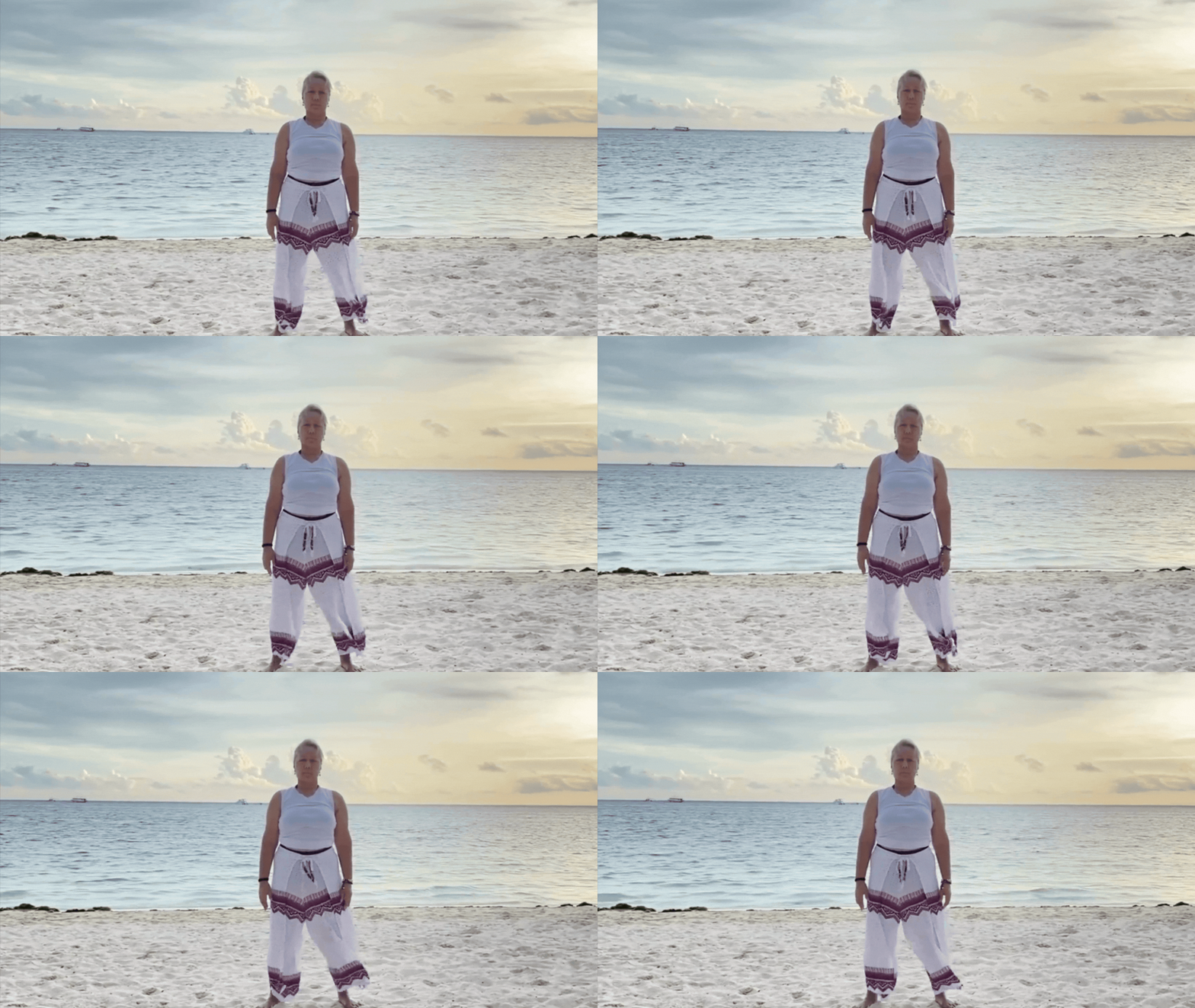
When I stand in the wuji stance—feet shoulder-width apart, knees soft, spine straight—and move ever so gently, slowly, and rhythmically with the breath, in pure presence, I know something.
Even if only 10% of people who registered show up to finish a course they do not pay for, it is this intentional investment of time, energy, and presence that is proof of taking action in the right direction.
It is bearing witness to each other's lives. It is generating awareness, balance, and equanimity in a deeply imbalanced world.
Your Call to Action: Three Ways to Practice Presence Without Payment
You don't need to teach Shibashi. You don't need to lead a workshop. But you can practice the spirit of Dana—the art of giving freely, without counting the cost.
1. Offer One Hour of Undefended Presence This Week
· Action: Identify someone in your life who needs to be heard. Offer them one hour of your full, undivided attention. No advice. No agenda. No fixing. Just presence.
· Why: The greatest gift you can give is your full attention. It says: "You matter. Your experience matters. I am here."
2. Practice "Everyday Shikantaza" in One Routine Activity
· Action: Choose one daily activity—washing dishes, walking, brushing your teeth—and do it with full awareness. Notice the sensations. The movements. The breath. When your mind wanders, gently return.
· Why: Mindfulness is not just for the cushion. It is for life. When you bring presence to ordinary activities, you transform them into meditation.
3. Give One Small Thing Without Expectation
· Action: Identify one skill, resource, or piece of wisdom you can offer freely to someone who needs it—not to gain anything, but simply because it is yours to give.
· Why: Generosity is a muscle. It gets stronger with practice. And every time you give, you prove to yourself that you have more than enough.
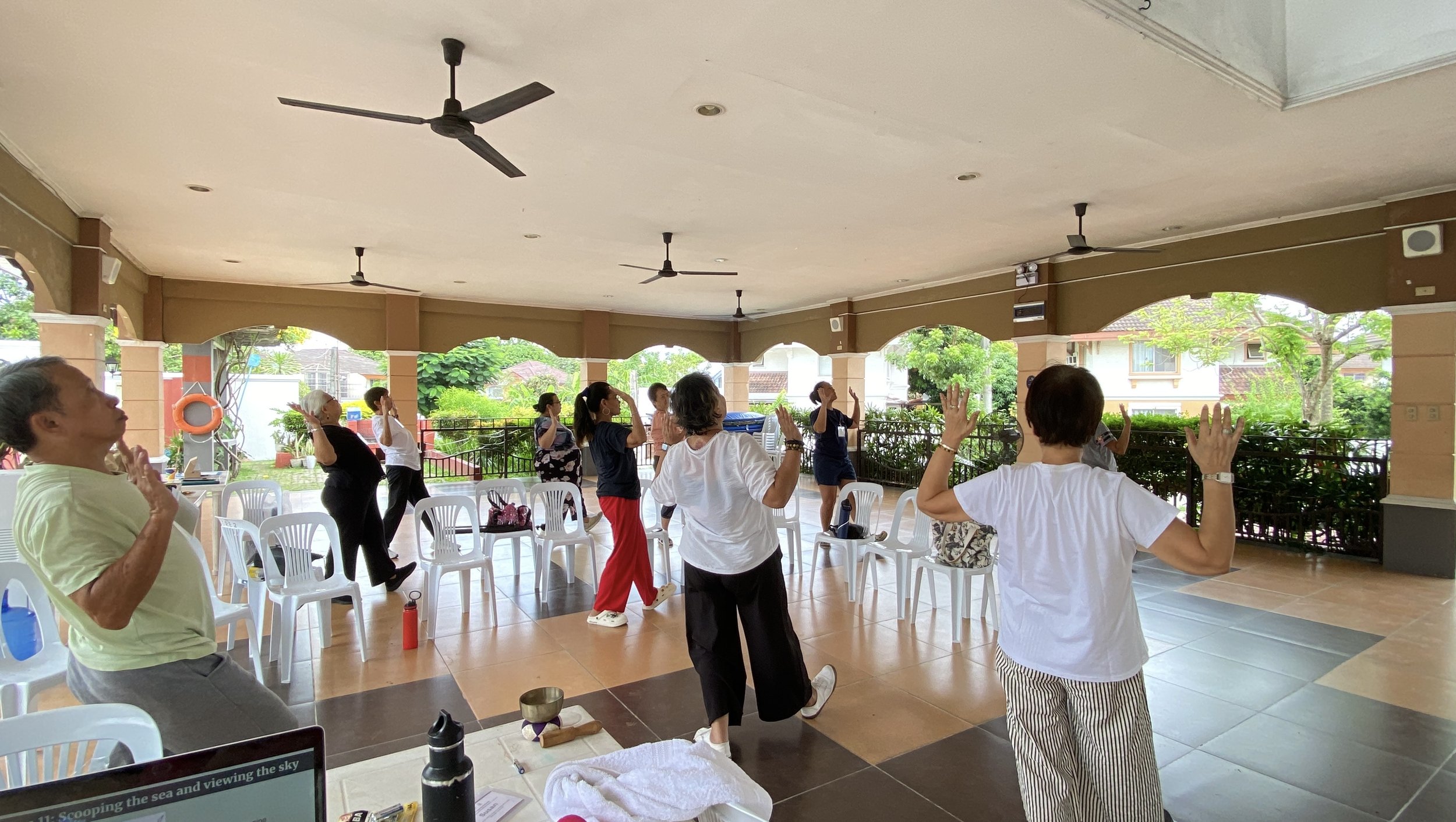
As I write this, I think of the 10 people who showed up today: Fida, Myda, Nati, Mario, Merci, Coney, Muz, Helen, Roselle, and Maria. They did not come just for a certificate. They did not come for a transaction. They came because something in them recognized something in this practice.
They came because, in a world that tells us to compete and hoard and protect, they are choosing the more difficult path: the path of presence, of generosity, of just showing up.
That is the revolution. That is the gift that cannot be counted.
🌷🌷🌷🌷🌷
-Susan Grace Rivera
Posted on: July 25, 2026