WOWWBLOG #62: The Feast, the Famine, and the Flock: What a Community Renewal and a Murmuration Taught Me About Staying the Course
How a 20-year-old vision document, a review of by-laws, and three simple rules reminded me that change always starts with me
WHAT: The Feast-Famine Rhythm and the Call to Remember
Consulting is a "feast-famine" business.
One moment, clients come in droves expecting deliverables "yesterday." The next, we are digging deep in the trenches, searching for kernels of meaningful work. Because 80% of what we do are longer-term engagements—10 to 12 months to multiyear—our work spans the 4 Cs: Consulting in Organization Development and Human Transformation, WELL Coaching, Capacity Creation and Culture Shaping, and Community Connection.
To sustain this, we must keep ourselves sharpening the saws. We are lifelong learners. We listen with ears to the ground and stay attuned to the subtle shifts in the systems we serve.
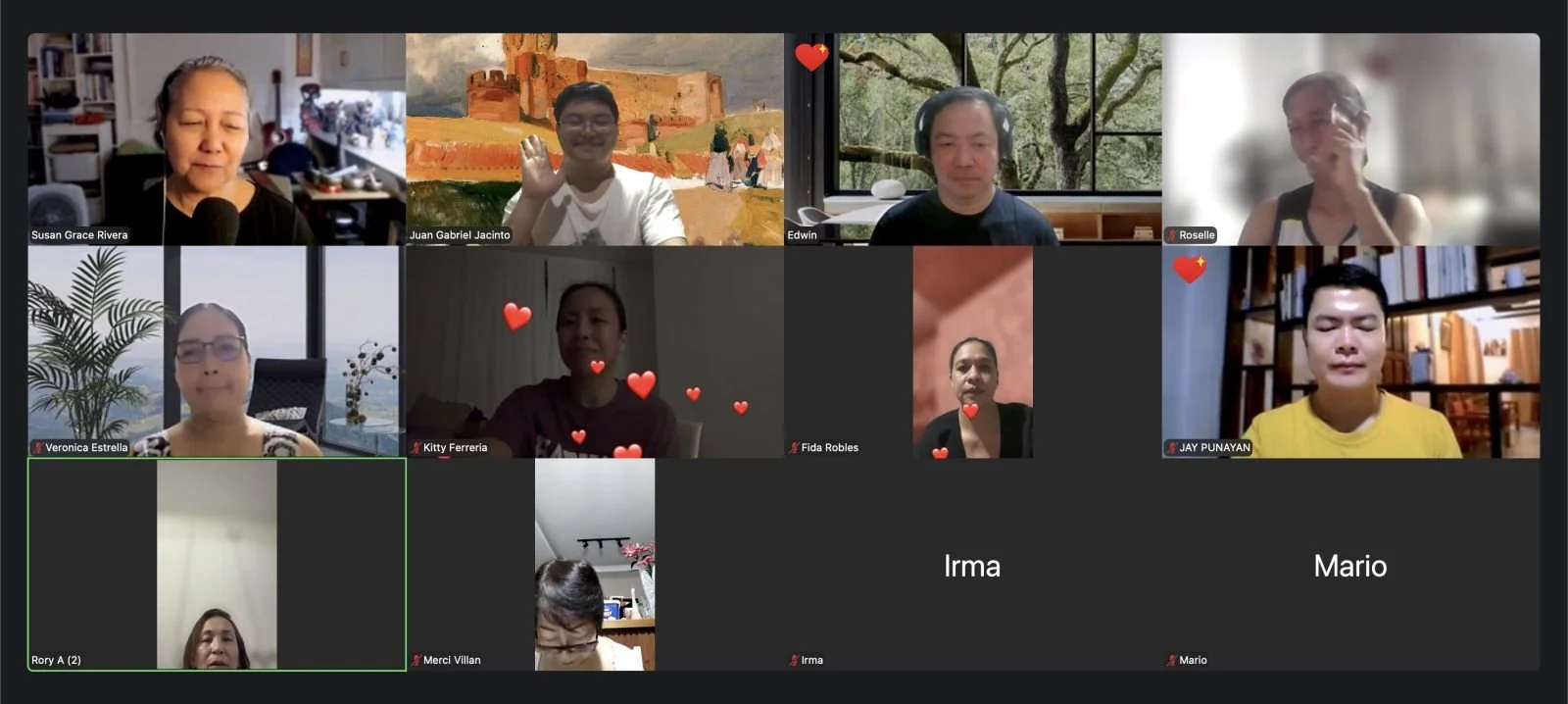
At TLC, our foundational practice is mindfulness meditation. Daily, we commit to sitting in silence and stillness. I leave to my core team the choice of practice, and I urge them to join our Circle of Mindfulness Meditation Practice (COMMP) every Friday from 7:30 to 8:30 PM.
Still emergent, we are also the Philippine hub for two global movements we are working to intersect: the Inner Development Goals (IDG) and the Wellbeing Economy Alliance (WEALL) . And we are migrating to a non-profit, targeting January 1, 2028, as our official first day.
Yet even as we dream big and imagine the possibilities our collective futures might hold, what keeps us grounded and connected are the quality of our relationships.

Yesterday, I sat around a table with five of the seven past presidents of our homeowners' association. The purpose was simple and straightforward: we volunteered to review our current articles and by-laws, ensuring compliance with the revised Implementing Rules and Regulations (IRR) issued by the Department of Human Settlements and Urban Development (DHSUD) .
Having reviewed all the documents, I felt something was missing. I was compelled to ask the real "Why, How, and What" that matters most to me and my family, having lived in this community for 21 years now.
I could not help taking stock of the unprecedented challenges we face. The existential permacrisis. The all-time lows our country ranks in measures that matter. The lackluster State of the Nation Address that was the farthest from inspiring.
Where does one go when one is close to hitting rock-bottom?
I searched my drive and found a document—the strategic planning process from 2006, when I was voted as the first president of our homeowners' association. My children were still young then. I wanted to participate in co-creating conditions for a better future. There is a part of me that feels I have failed them.
But I also felt a strange spark to carry on against all odds.
So I requested the review group to grant me ten minutes to share my point of view. I presented the documented process we followed in 2006 and the deck I had prepared. I am happy that it did not take much persuasion; all present supported the framing and expansion of our review into a process of Community Renewal.
SO WHAT: The Wisdom of 2006, the Murmuration, and the Power of Local Rules
As I reflected on this experience, I realized that the same principles that guided us in 2006 are the principles that guide resilient systems everywhere.
In 2006, we did not start with rules. We started with identity. We asked: "What kind of community do we want to build together?" That produced our vision, mission, values, strategies, and action plans. Governance came after identity, not before.
Now, twenty years later, much has changed. New homeowners. Nearly 400 property owners. New national regulations. Evolved expectations. But one thing remains unchanged: our collective desire to create a thriving, united community.
This is where the murmuration of starlings speaks to me.
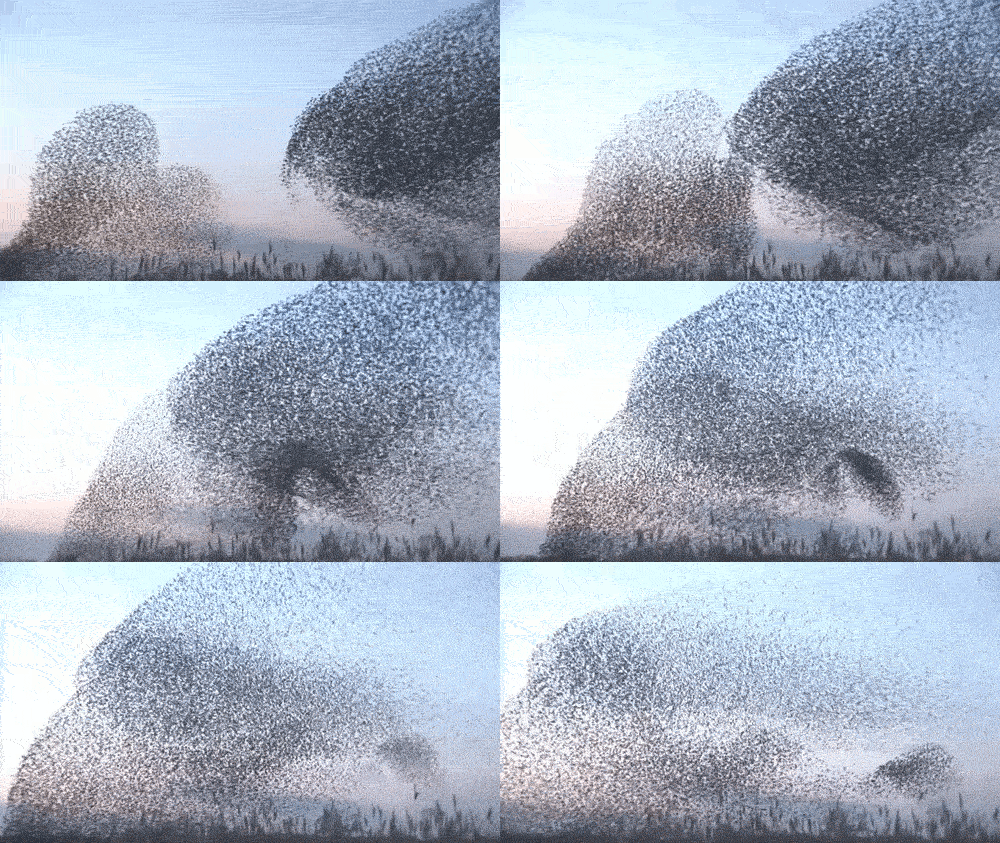
Starlings move as one without a leader, following just three simple rules:
1. Separation: Avoid crashing into your closest neighbors.
2. Alignment: Match the speed and direction of nearby birds.
3. Cohesion: Stay close to the group by moving toward nearby flockmates.
These three rules allow thousands of birds to respond instantly to a predator without central command. No bird is in charge. Yet the flock moves as one.
How might this apply to us—to our communities, our organizations, our world?
· AI Revolution: Global AI policy cannot rely on slow, centralized laws. Nations must practice alignment—continuously syncing on baseline safety protocols while allowing individual tech ecosystems to innovate. Tech companies must practice separation—ensuring their subsystems do not cause harm—while maintaining cohesion with broader human interests.
· Geopolitical Resilience: Relying on single, centralized hubs for energy or microchips leaves us vulnerable. By building decentralized, redundant supply networks, the global economy can shift instantly if one link is cut—just as a murmuration splits around a predator and reforms.
· Conflict Mitigation: When international bodies face gridlock, local diplomacy becomes vital. Neighboring communities can negotiate localized ceasefires by focusing on immediate, shared survival.
· Information Warfare: Algorithmic polarization thrives on mass manipulation. We can resist by tightening our local cohesion—focusing on trusted, verified local networks rather than getting swept up in viral disinformation storms.
Resilience comes from local adaptability and decentralized coordination. Top-down commands fail because they are too slow.
NOW WHAT: The Call to Community Renewal—Starting with Me
I realize with greater clarity that change always starts with me and my immediate sphere of influence.
We all have agency. We can, starting with ourselves, change the direction our world is headed.
So here is my invitation to you—and to myself.
1. Revisit Your Own "Founding Document"
· Action: What was the vision that first called you—to your work, your community, your family? Dig it up. Read it. Ask: "Are we still living into this? If not, what needs to be renewed?"
· Why: Governance came after identity. If you have lost sight of your identity, no amount of rules will bring you back.
2. Practice the Three Rules of Murmuration in Your Life
· Separation: Where do you need to create healthy distance—from toxic habits, draining relationships, or outdated commitments?
· Alignment: Who are you synchronizing with? Are you moving in the same direction as your values and your people?
· Cohesion: Where do you need to stay close to the flock—even when the temptation to go it alone is strong?
3. Lead a "Community Renewal" in Your Own Sphere
· Action: Identify one group you belong to—a team, a neighborhood, a family. Ask: "What kind of community do we want to become?" Not what rules we need, but what identity we aspire to.
· Why: People support what they help create. When we co-create a shared vision, the rules that follow will be owned, not imposed.
As I left that review session, I felt something shift. Not because we solved everything. But because we remembered who we are.

The feast-famine rhythm of consulting continues. The permacrisis continues. The world remains complex and uncertain.
But I know now, more than ever, that resilience comes from the quality of our relationships and the clarity of our shared purpose.
We are not separate birds flying alone. We are a murmuration—moving together, aligning with each other, staying close when the predator appears.
And when we do, we can change the direction of the flock.
-Susan Grace Rivera
Posted on: August 02, 2026