BOWWBLOG #44: When the Price of Diesel Tops ₱150: A Family's Journey Toward Energy Sovereignty
What solar panels, a backyard garden, and a village crisis plan taught me about resilience when systems fail
WHAT: The Wake-Up Call at the Pump
Three months ago, I filled my tank at ₱57 per liter. Today, that same liter costs ₱150—and the Department of Energy warns of another ₱11-12 hike next week. In a country 98% dependent on imported fuel, the war in the Middle East has landed not just in headlines, but in our household budgets, our daily commutes, and the quiet anxiety of wondering how much longer we can absorb these hits.
Our government has declared a national energy emergency under Executive Order No. 110. The UPLIFT framework promises aid, but for families like mine—and especially for the 58.7% of Filipinos classified as "vulnerable" to poverty—waiting for systems to save us is not a strategy. It is a gamble we cannot afford.
So my family has on ongoing discussion in our group chat. We looked at our expenses—electricity, food, transportation—and asked the only question that matters in times like these: What can we control?
The answer came in sunlight.
We decided to invest in a 6KW solar installation. Ten panels, an inverter, a battery. The cost is significant—₱325,000—but our monthly bill will drop from ₱18,000 to around ₱5,000. If we are disciplined with air conditioning, unplug appliances not in use, and live more mindfully, we can het this to “zero” and effectively go "off-grid" in our own home. I sent our family group chat a message: "It's like living Off the Grid! Let's all help each other ha?"
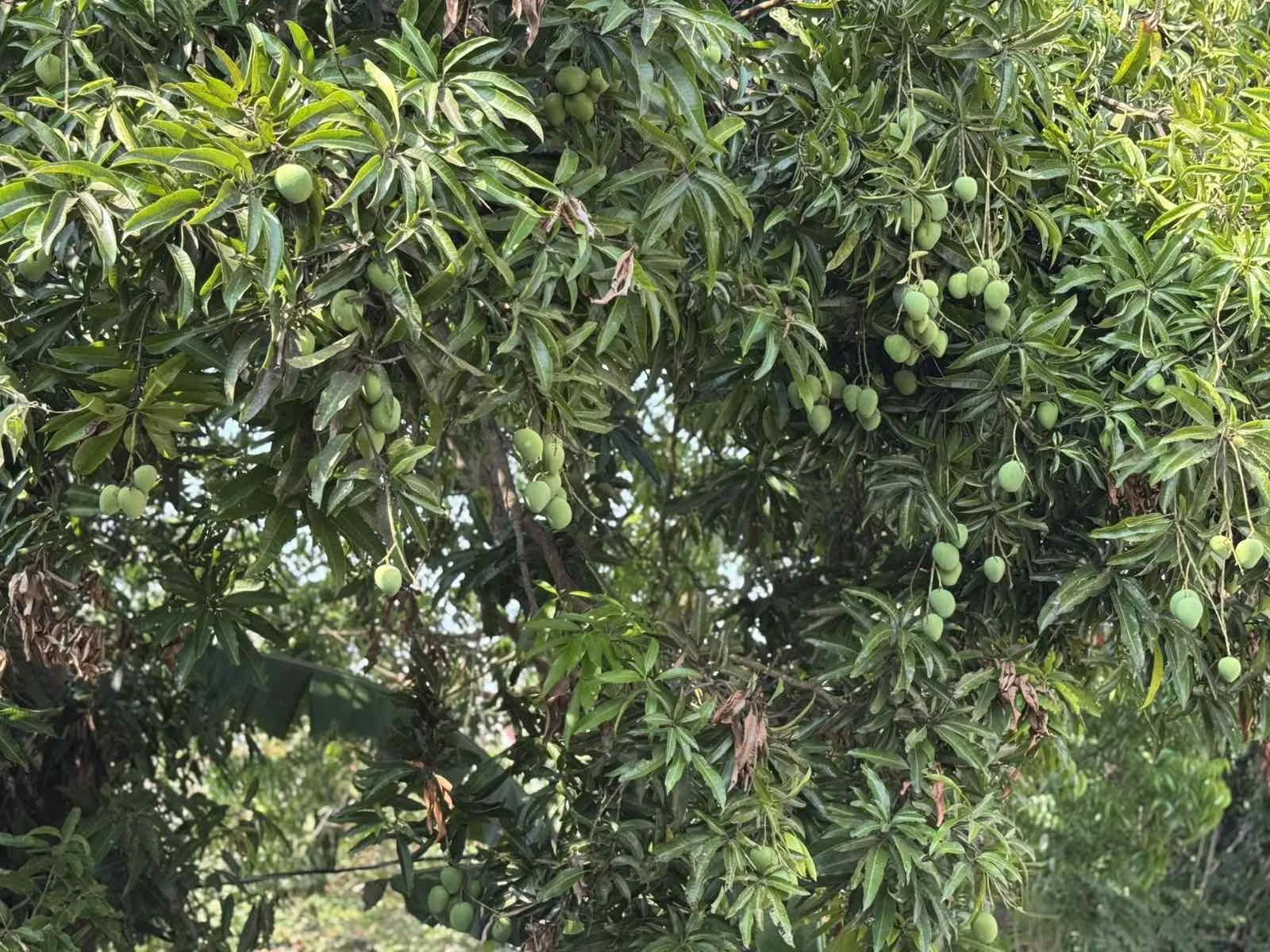
But solar alone isn't enough. We started a small garden—tomatoes, okra, eggplant, sili. Small, yes. Still seedlings, but in a month or so, I will be harvesting - garden to plate! I am so grateful for my fully grown mango and chico trees, and happy we just harvested a buwig of saba! And each harvest is one less trip to the market, one less exposure to volatile prices, one small act of reclaiming our food sovereignty.
I also joined our village crisis planning meeting. We sat together—board members, neighbors, business owners—and mapped out scenarios: political, economic, social, technological, legal, environmental. We asked hard questions: What happens if transport costs double again? What happens to crime rates when people cannot afford food? How do we, as a community, protect the most vulnerable among us?
SO WHAT: The Environmental Pillar in a Time of Crisis
This is what the Environmental Pillar looks like when the abstractions of "sustainability" become the necessities of survival. It is not about recycling bins and reusable bags—though those matter. It is about recognizing that our well-being is tied to the health of the systems we inhabit.
When global supply chains fracture, local food systems become lifelines.
When fuel prices spike, solar panels become shields.
When government response feels inadequate, community organizing becomes our infrastructure.
The pandemic taught us that we could not isolate our way to safety. This crisis is teaching us that we cannot consume our way to security. The path forward is not more extraction, but more connection—to the land, to each other, to the wisdom of living within our means.
I think often of the 2 million Overseas Filipino Workers in the Middle East, whose remittances sustain so many families here. Some are now being repatriated. Others wait in staging areas, uncertain of what comes next. And here at home, perception-based surveys show that between 37% and 51% of Filipino families now consider themselves poor. The Philippine Institute for Development Studies warns that 58.7% of our population is "vulnerable"—one economic shock away from falling into poverty.
This is not a time for despair. It is a time for action rooted in love.
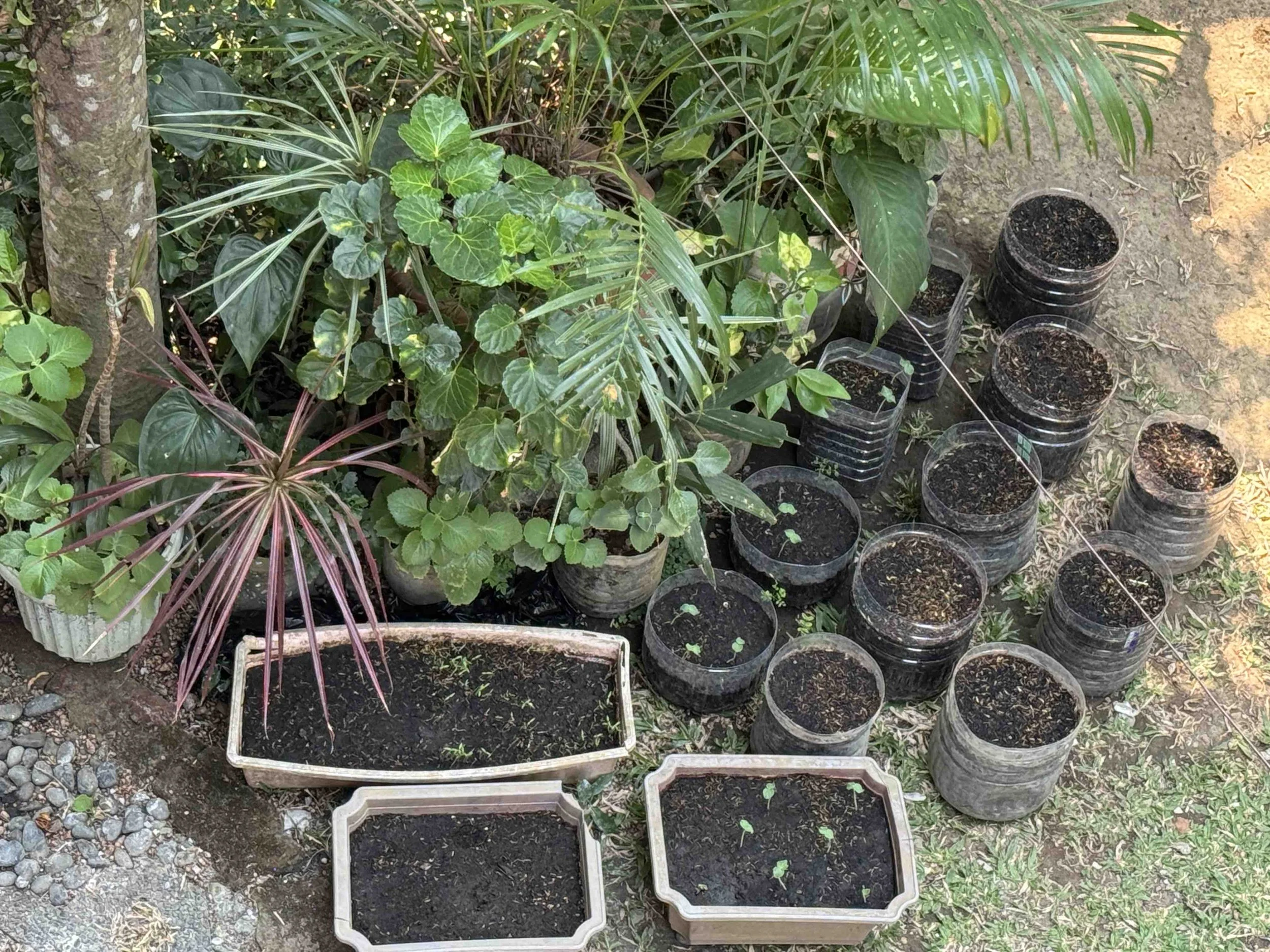
When I see our little garden sprouting, when I imagine our solar panels soaking up the sun, when I recall the faces of neighbors around our crisis planning table—I feel something shift. Not hope in the abstract, but grounded optimism: the quiet certainty that we are not passive victims of global forces. We are active participants in our own survival and flourishing.
The Inner Development Goals (IDG) call this "Stewardship"—the capacity to take responsibility for the whole. WEALL calls it building an economy that serves life. I call it what my family is learning to do, one small step at a time: living with enough, sharing what we have, and trusting that together, we have more than enough.
NOW WHAT: Your Family's First Step Toward Resilience
You may not have the resources for solar panels. You may not have a garden plot. But you have something more powerful than any single investment: agency. The choice to see reality as it is, and to act from that clarity rather than from fear.
Here is how your family can begin building resilience, starting where you are.
1. Take an Honest Inventory (Seeing Reality as It Is)
· Action: Sit with your household. List your three biggest expenses—electricity, food, transportation. Ask: What is within our control? Not everything. But something always is.
· Why: Agency begins with clarity. Naming what we can influence shifts us from helplessness to empowerment.
2. Choose One "Off-Grid" Practice This Week (Personal Agency)
· Action: Pick one small way to reduce dependency. Unplug idle appliances. Cook one meal from scratch instead of ordering delivery. Walk or bike a short trip instead of driving. Plant one seedling in a pot—even basil on a windowsill counts.
· Why: Small acts of sovereignty compound. Each one says: I am not passive. I am learning to provide for myself and my family.
3. Connect with One Neighbor (Community Connection)
· Action: Knock on a door. Check in on someone who may be struggling. Ask: How are you managing the price hikes? Share what you are learning. Exchange a vegetable if you have extra, or simply a phone number for emergencies.
· Why: Resilience is not individual. It is built in the spaces between us. A neighborhood that knows each other is a neighborhood that survives.
4. Map Your Village (Seeing the Larger System)
· Action: Ask your barangay captain or homeowners' association: What is our crisis plan? If there is none, ask: How can we help create one? Even a simple list of neighbors with skills—nurses, electricians, drivers—is a form of infrastructure.
· Why: Systems fail. Communities adapt. When we organize locally, we become the safety net we have been waiting for.
5. Practice "Grounded Optimism" (The Inner Work)
· Action: Each evening, name one thing you did today that moved you toward greater resilience. Not as a to-do list, but as a quiet acknowledgment: I am learning. I am building. I am not helpless.
· Why: The Inner Development Goals remind us that outer change requires inner capacity. Cultivating the mindset of stewardship is as important as installing solar panels.
This is the Environmental Pillar in its fullest expression: caring for our home because it is caring for ourselves. Not as an escape from reality, but as the most practical, most loving, most revolutionary response to it.
The price of diesel may continue to rise. Global forces may remain beyond our control. But how we respond—together, intentionally, with love—is always within our grasp.
What is one small step your family will take this week toward greater resilience? Share it below. Let's learn from each other, one household at a time.
-Susan Grace Rivera
Posted On: March 29, 2026