BOWWBLOG #42: The Gangsa Still Beats in My Heart: A Homecoming to the Cordilleras After 56 Years
How a voiceless, half-blind pilgrim found wholeness in the mountains that raised her
WHAT: The Road Back to My Roots
Three days ago, we drove that zig-zag road to where the pine trees thin and the clouds become your companions. Beside me was Fida Harrison-Robles, colleague of twenty years, now family. I wanted to thank her for simply being who she is, and what better gift than to share the place that made me?
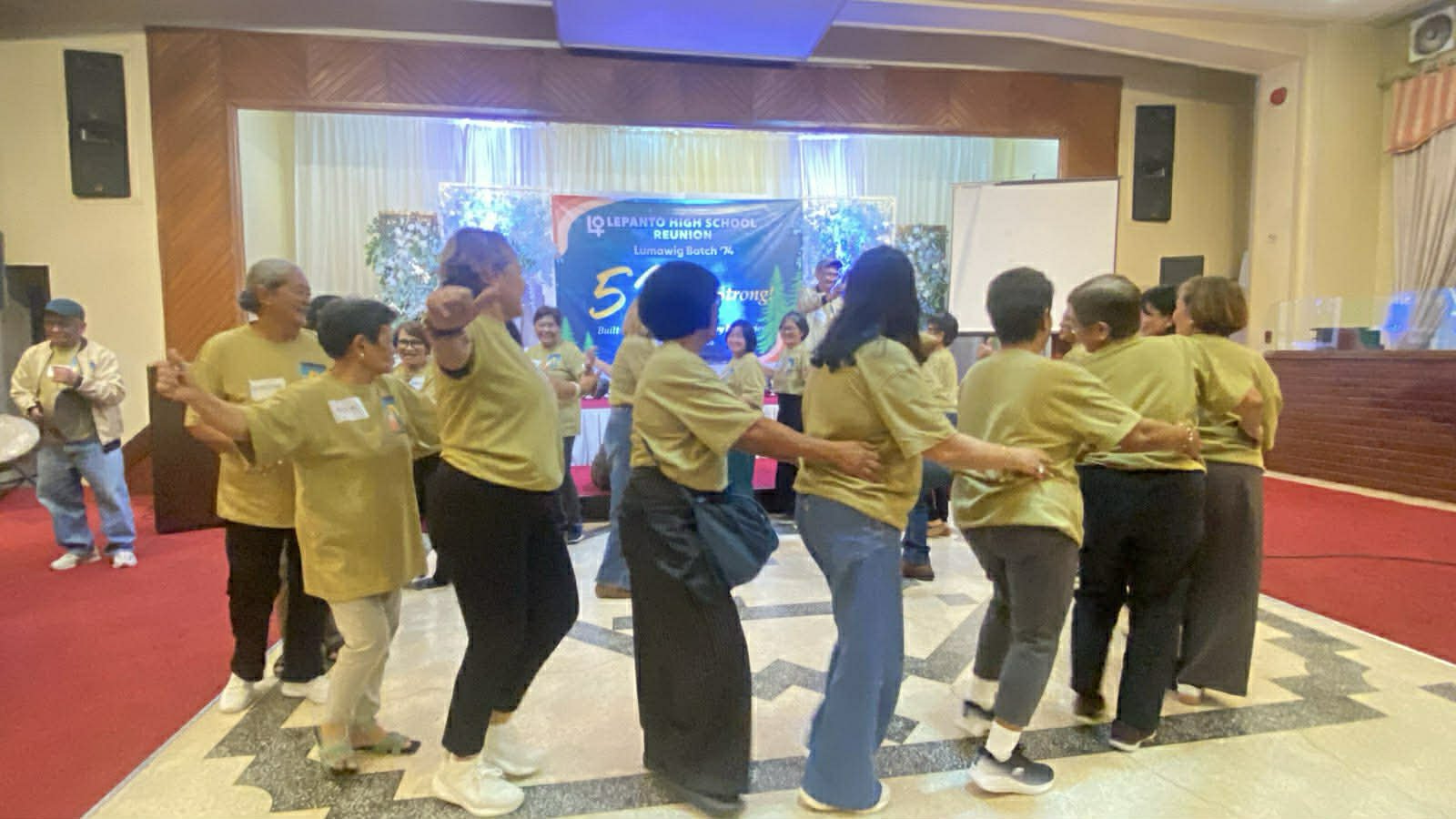
We were headed to Baguio City, but more importantly, to a reunion I never expected to attend: Lepanto High School Batch 1974. I did not graduate with them. I left in Grade 6. Yet they remembered me. After fifty-six years, they remembered the girl from the mining town. And I too remember them, oh so vividly! Delia, Helen, Ana, Rallie, Tom, Ervine, Letty, Stephen, and others too many to name!
I was born and raised in Lepanto, Mankayan, Benguet—a place that existed because of the Lepanto Consolidated Mining Company (LCMC) , established in 1936. My father, Virgilio “Gil” Rivera Sr., was a Mill Operator. My mother, Juliana “Julie” Cervantes, was a company nurse. They met, fell in love, and married in this mountain enclave where copper and gold lay beneath the soil and indigenous wisdom lay beneath every tradition.
At an elevation of 1,320 meters, with peaks reaching 7,264 feet, Mankayan is rugged, dramatic, and breathtaking. The Cada Plateau, at nearly 6,000 feet, is where vegetables grow in neat rows against impossible slopes. The Abra River begins here, carrying mountain water to distant provinces.
But the real richness was never the ore. It was the people.
SO WHAT: The Gift of Growing Up at the Crossroads
Before "diversity, equity, and inclusion" became corporate vocabulary, I lived it. My childhood was a daily immersion in worlds that rarely mingled elsewhere.
My best friend was Ambet Cub-ao of the Ifugao tribe. Joe Sok-kong was Igorot. There were migrants from other provinces, too! The expats—mining engineers and geologists from Colorado, Nevada, and Montana - had come to run the operations with local engineers, technicians and operators. My classmates and I - all students of a “public school” when it still meant quality education- played together, learned together, and grew up together.
The cultural hybridity was seamless. One weekend, we might attend a cañao—the sacred ritual feast of the Igorots, where the gangsa (flat bronze gong) beats its ancient rhythm and the tayaw and pattong dances honor ancestors and spirits. The next weekend, we would be at the Community Hall, watching American expats call out "do-si-do" at a square dance, their children in cowboy boots and checked shirts.
We absorbed it all. The gangsa and the guitar. The cañao and Christmas pageants. The rice terraces and the golf course. This was not fusion for show; it was simply how we lived.
Now, fifty-six years later, I returned to a slice of this community—voiceless from my ADSD condition, struggling to see clearly from post-surgery complications. And none of it mattered. Because when you are embraced by people who knew you before you became anything, before you achieved anything, before you lost anything—you are simply seen. You are simply home. What safe space we had fun in and celebrated each other!
We gathered under the name “Lumawig” - a term from the Cordilleras honoring those who have passed, and the connection to ancestors and indigenous heritage. We remembered classmates, teachers (two of whom were present- Clarita Bautista Agustin and Remedios Mendoza Cawis, Math and History teachers respectively - and neighbors no longer with us. And for one day, we were young again, laughing in the mountain air that smells exactly as it did in the late 1960’s.
NOW WHAT: The Roots That Hold Us All
You may not have grown up in a mining town in the Cordilleras. You may never have heard a gangsa or watched a cañao. But you have roots somewhere. And those roots matter more than you know.
In a world that has become fragile, complex, uncertain, and deeply troubling, we need places to stand. We need people who remember us before we became our job titles, our ailments, our successes, our failures. We need communities where we are simply ourselves—flawed, aging, voiceless, half-blind, and utterly welcome.
Your Call to Action:
This week, I invite you to do one small thing to honor your roots:
1. Call someone who knew you before. A childhood friend, an old neighbor, a cousin you haven't spoken to in years. Let them hear your voice. Let them remind you of who you were—and who you still are beneath all the layers.
2. Visit a place that shaped you. It doesn't have to be far. A school, a park, a street corner, a province. Stand there and remember. Let the sensory memories wash over you—the smells, the sounds, the feeling of being young.
3. Learn about the land you stand on. Whether you are in Manila, Cebu, Davao, or somewhere far from here, take a moment to learn the indigenous history of that place. Whose ancestors walked that ground? What traditions lived there before?
4. If you still have elders, listen to them. Record their voices. Write down their stories. Ask them about their own childhoods. This is not just nostalgia; this is preserving living history.
5. Host your own "Lumawig" moment. Gather people who share a piece of your past—classmates, former neighbors, old teammates. It doesn't need to be elaborate. A simple merienda, a shared photo album, an hour of remembering. You will be amazed at how the years dissolve.
The gangsa still beats in my heart. The pine-scented air still fills my lungs. The mountains still hold me.
They hold you too, in ways you may have forgotten.
Go home. Even for an afternoon. Even for a phone call. Even for a moment of quiet remembering.
Our roots are waiting.
-Susan Grace Rivera
Posted on: March 08, 2026
We do invite you to be formal members in our TLC Community and explore which of our “7 Pillars of wHEW” (Wholistic Health and Wellbeing) you’d like to do a deeper dive on!
Be a member here: https://www.thetlcsolution.com/registration-page