
How a voice disorder, a text-to-speech experiment, and the quiet act of deep listening are redefining what it means to build a Culture of Care in the Algorithmic Age
WHAT: The Invitation to the 1st SLMC Talent Conference
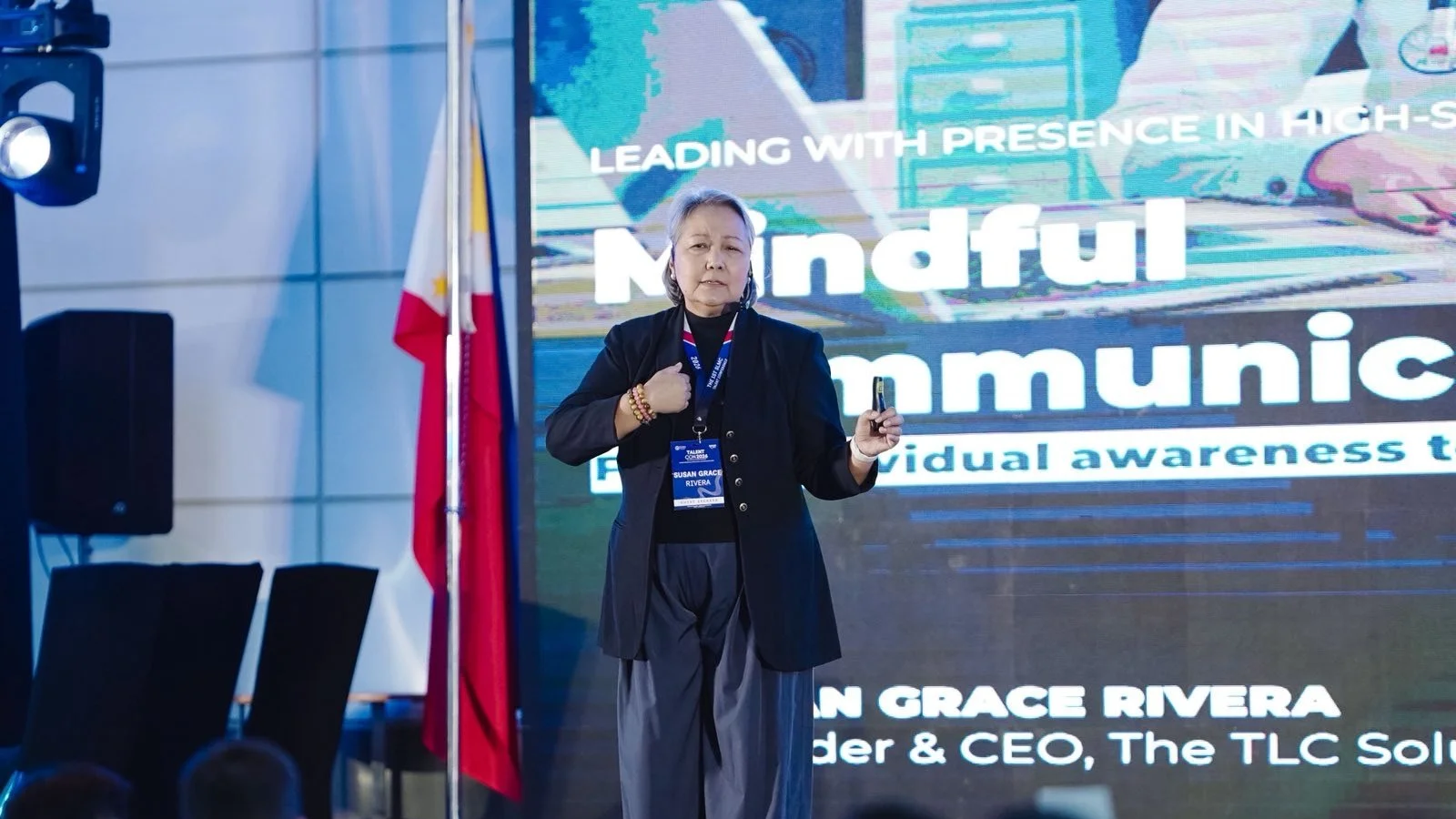
I was recently invited to speak about “Mindful Communication” at the 1st Talent Conference of the St. Luke’s Medical Center. It was an audience of over 300 leaders from all aspects of the Philippines’ #1 hospital, as recognized by Newsweek’s World’s Best Hospitals 2026.
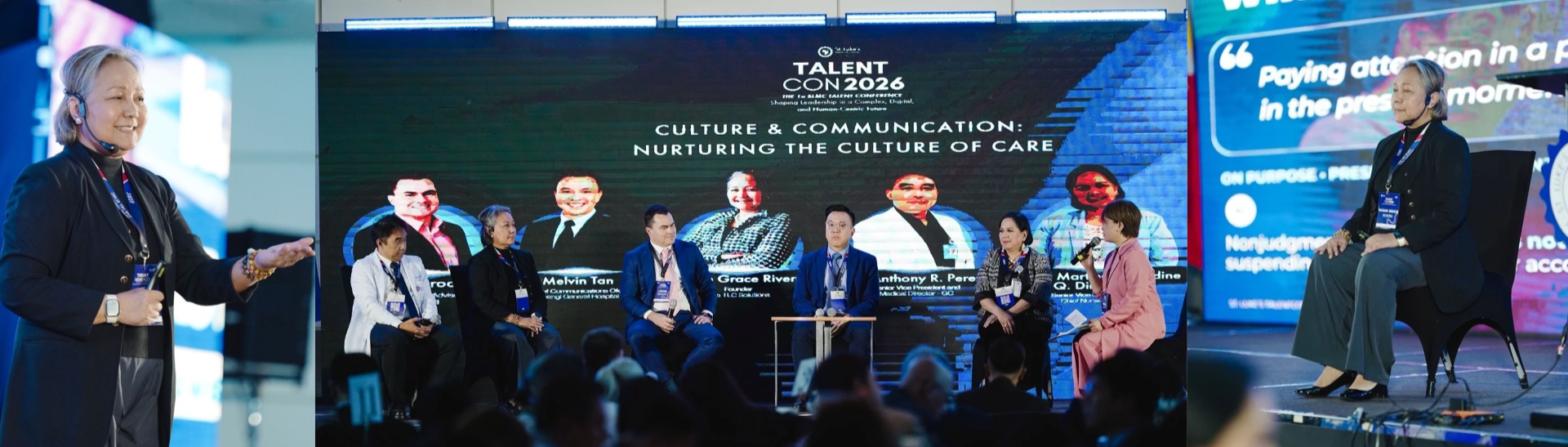
My specific assignment was a 20-minute Spotlight Session: Mindful Communication: Leading with Presence in High-Stress Environments, followed by an interactive Executive Panel Discussion on the role of leaders in Culture and Communication.
It was uncanny that this topic was assigned to me. While it leveraged my four decades of experience as a CHRO and what I call a “4C professional” (consultant, coach, capacity creator, and community connector), the most impactful foundation for my talk was my 35-year contemplative meditation practice. It is the kind of communication that goes beyond the commonplace understanding—it is the kind of communication that listens deeply in ways that are authentic and generative.
But there was a beautiful vulnerability in this invitation. I disclosed to the organizers that, because of my spasmodic dysphonia (ADSD) condition, I would be using text-to-speech (TTS) technology combined with my live voice.
I was amazed at how open the audience was to co-create the conditions for our joint experiment. For them, it meant leaning in a bit more and practicing their deeper listening muscles. For me, it meant delivering in a format that is not ordinary - more experiential. How does one create and sustain a “Culture of Care?” Well, it must be a culture that listens holistically with all the senses… and with human skill and wise action, complemented and augmented by the latest in medical technologies and efficient operational processes.
SO WHAT: The Algorithmic Age and the Analog Heart
I am not surprised that St. Luke’s is #1—the “unparalleled leader” in the Philippine healthcare industry, as one reads in their vision statement. The conference itself was a microcosm of the culture of care their brand speaks of.
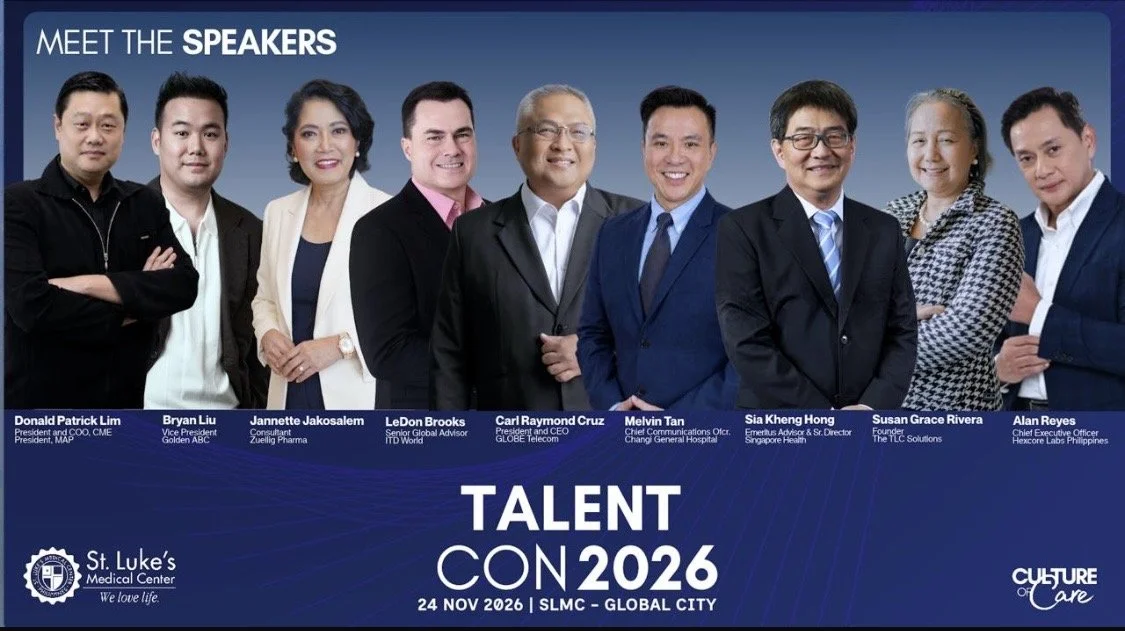
In the planning of this Talent Conference—from the initial invite, to the briefings, to the introduction of speakers to each other, to the conference proper where I had Ten Rogelio as my “Speaker Experience Navigator”—it was palpably the co-creation of conditions that made me feel cared for. Kudos to Irene Isleta, Chini Concepcion, the leaders behind it all, CHRO Atty. Jun Obtinalla, and Pres/CEO Dennis Serrano!
This experience beautifully contrasted with the thought-provoking presentation of another speaker, Donald Lim, on The Digital Steward: Executive Leadership, AI Governance, and Human Empathy in the Algorithmic Age. He spoke a profound truth: "AI finds patterns. But patients need reassurance, explanation, compassion, and someone accountable. Intelligence can be augmented. Humanity must be protected."
This is exactly what my session aimed to address. My message was simple: In leadership, we always start with leading the self, before leading others and the specialized functions or organization units we lead. This means beyond one’s expertise, and training in SOP, practicing mindfulness daily in all areas of our lives so that when crises and emergencies hit—especially when least expected—we are able to keep the Calm, Clarity, Courage, and Compassion in caring for others.
Culture is not the words we put in annual reports or emblazoned as murals on the walls. It is the thousands of words we speak, the choices and decisions we make, and the actions we take every day that shape that culture. It is how one shows up as individual and as a collective of inter-related and inter-dependent human beings. And that culture is sensed from the experience one has—the wait time in doctors’ clinics, the presence of the “attending” physician, the patience of the secretary, the efficiency of call handling, the very cleanliness of the restroom, and a million other “moments of truth”—not just the quality of care received in the ER or OR.
Perhaps medicine and healthcare is the most intimate of all services one can experience. Hence, it is a relationship that can be made or broken by a combination of variables. And at the root of it all is trust. Built on competence, commitment and care.
NOW WHAT: The Power of the Analog Pause
In a world of high-tech algorithms and digital transformation, we must remember that the human spirit is analog. It craves presence, eye contact, touch, and deep listening.
Just as I witnessed 300 healthcare leaders lean in to listen to a voice augmented by technology, I am reminded of the recent outputs from our 8th Off-the-Grid Flowcation. Our social workers—women and men who care for the most vulnerable youth—sat with paper, crayons, and leaves. They mapped out their life "FLOWs," drew trees of growth, and created vision boards mapping their Ikigai.
Whether it is a room full of hospital executives or a sanctuary full of social workers, the truth remains: we are all seeking connection. We are all seeking a culture of care. And that culture is mindfully sustained moment by moment by moment.
Your Call to Action: Three Steps to Mindful Communication
You do not need to lead a hospital or attend a conference to practice this. Here are three simple ways to bring mindful communication into your daily life this week:
1. Practice the S.T.O.P. Method
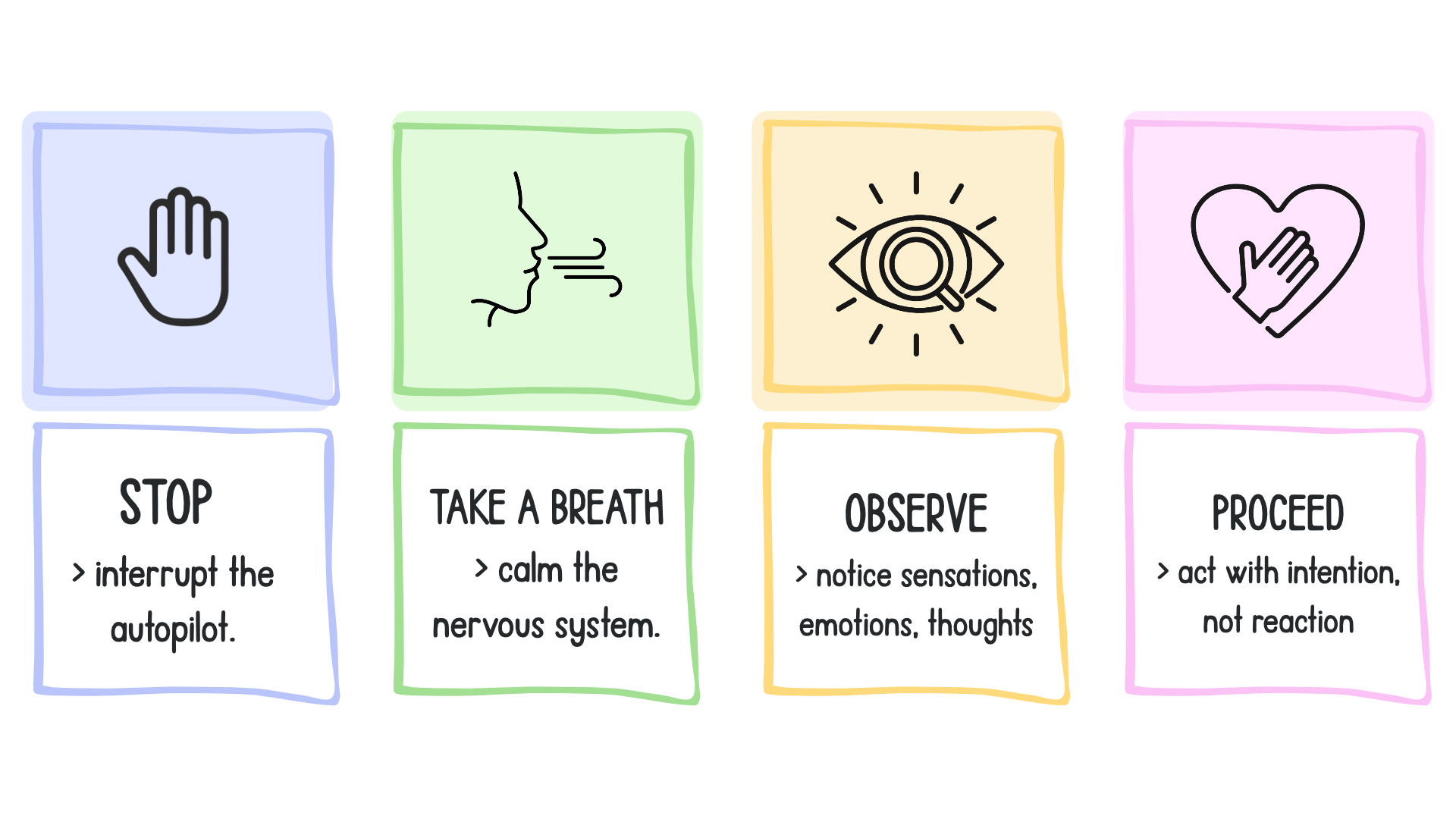
· Action: Before responding to a frustrating email, a distressed colleague, or a challenging family member, Stop. Take a breath. Observe what is happening in your body and mind. Then Proceed with intention rather than impulse.
· Why: A few seconds of mindful awareness can change the entire direction of a conversation. It shifts us from reaction to response.
2. Listen Through the 4 Lenses of Truth
· Action: When in a conflict or a complex meeting, pause and ask: What is the subjective truth here (what am I feeling)? What is the objective truth (what are the facts)? What is the normative truth (what are our shared values)? And what is the complex truth (what patterns are emerging)?
· Why: This moves us from certainty to curiosity, and from defending our position to discovering what we may not yet see.
3. Make One 7-Day Commitment
· Action: Choose one recurring situation where mindful communication is challenging. Commit to conducting one "adaptive experiment." Reflect afterward: What did I notice? So what does it mean? Now what will I do differently?
· Why: One conversation. One adaptive action at a time. That is how individual practice begins to influence an entire culture.
By practicing mindfulness, each one of us—and all of us together—can help co-create the conditions of care that are so essential to healing and recovery. Not only for our patients, clients, or stakeholders, but especially for one another.How a voice disorder, a text-to-speech experiment, and the quiet act of deep listening are redefining what it means to build a Culture of Care in the Algorithmic Age
-Susan Grace Rivera
Posted on: November 28, 2026
Photos taken by SLMC team