
WOWWBLOG #69: The Starlings of the Diaspora: What Erlinda and Myrna Taught Me About Sacrifice, Survival, and the Quiet Heroism of Our OFWs
How two chance encounters in Spain revealed the truth behind the statistics—and why I will never stop telling their story
WHAT: The Encounters That Changed Me
I got home from Barcelona around 8 PM on Monday. Exactly seven days from my flight out. A quick warm shower, then sleep.
Tuesday: three time-blocked calls for projects, followed by group process facilitation of three whole-day in-person back-to-back learning experiences.
I will admit: my energy was drained, close to running on empty. Long-haul flights exact a heavy toll on an aging body.
What kept me going?
1. My meditation and mindfulness practices. No matter the time zone or geography—including in-flight time—they were a wellspring of energy.
2. The coaching stance. Paying total attention, active listening, standing in inquiry, exploring for information, examining my own perspective when alone, and sharing it with permission when in conversation. These foundational skills helped me make sense of the myriad patterns that emerge when traveling.
3. The special conversations. Quick but deep exchanges that sparked new hope inside me. Listening opportunities that were unique in themselves but part of a greater whole.
These were small, intimate containers—not of small talk, but of human connection and a strong affirmation: "I see you. I thank you."
Erlinda
En route to Barcelona, I was seated beside Erlinda M. She has worked as a domestic helper in Madrid, Spain, for 18 years now.
She told me she was at first lost and bewildered working in a foreign country. But she acclimatized. She speaks the language with ease—I observed this when she conversed with a passport control officer upon landing.
She has three adult children. She is in her mid-50s. Now, she says, it is her grandchildren she works for.
She earns €1,600 per month—equivalent to about PHP 116,000.
That salary would place Erlinda in a higher-income bracket compared to most local jobs in the Philippines. In the local job market, earning over ₱100,000 a month is considered a high-income or executive-level salary. It would take a Filipino professional many years of experience and promotion to reach this level locally.
For context:
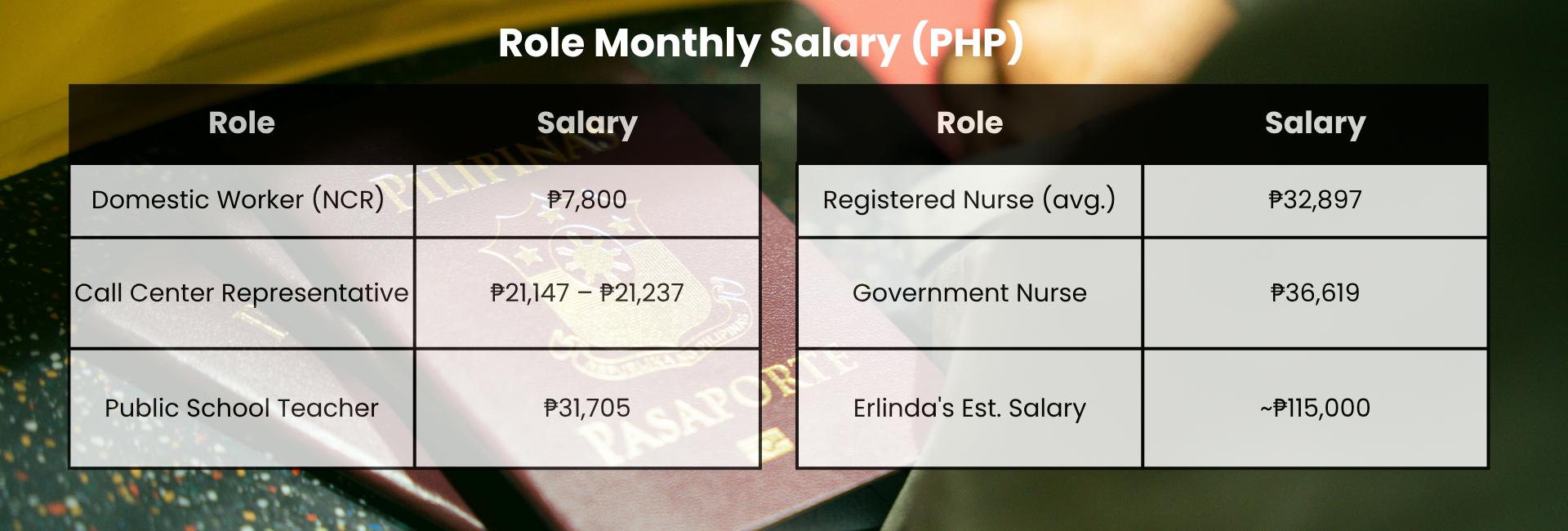
She earns 14 times the local minimum for a kasambahay in Metro Manila. She earns 3 to 4 times the salary of a teacher or nurse in the Philippines.
Her income is not just a "domestic worker's salary" in the local context—it is equivalent to what a senior manager or executive might earn in the Philippines.
Myrna
As I went around the public market of Vic, shopping for pasalubong after the HSD Gathering, I chanced upon Myrna. She was visibly joyful to see a kapwa Pilipino on this fine, sunny Sunday. It was as if we knew each other so well—a chance encounter to ask "Kamusta ka?"
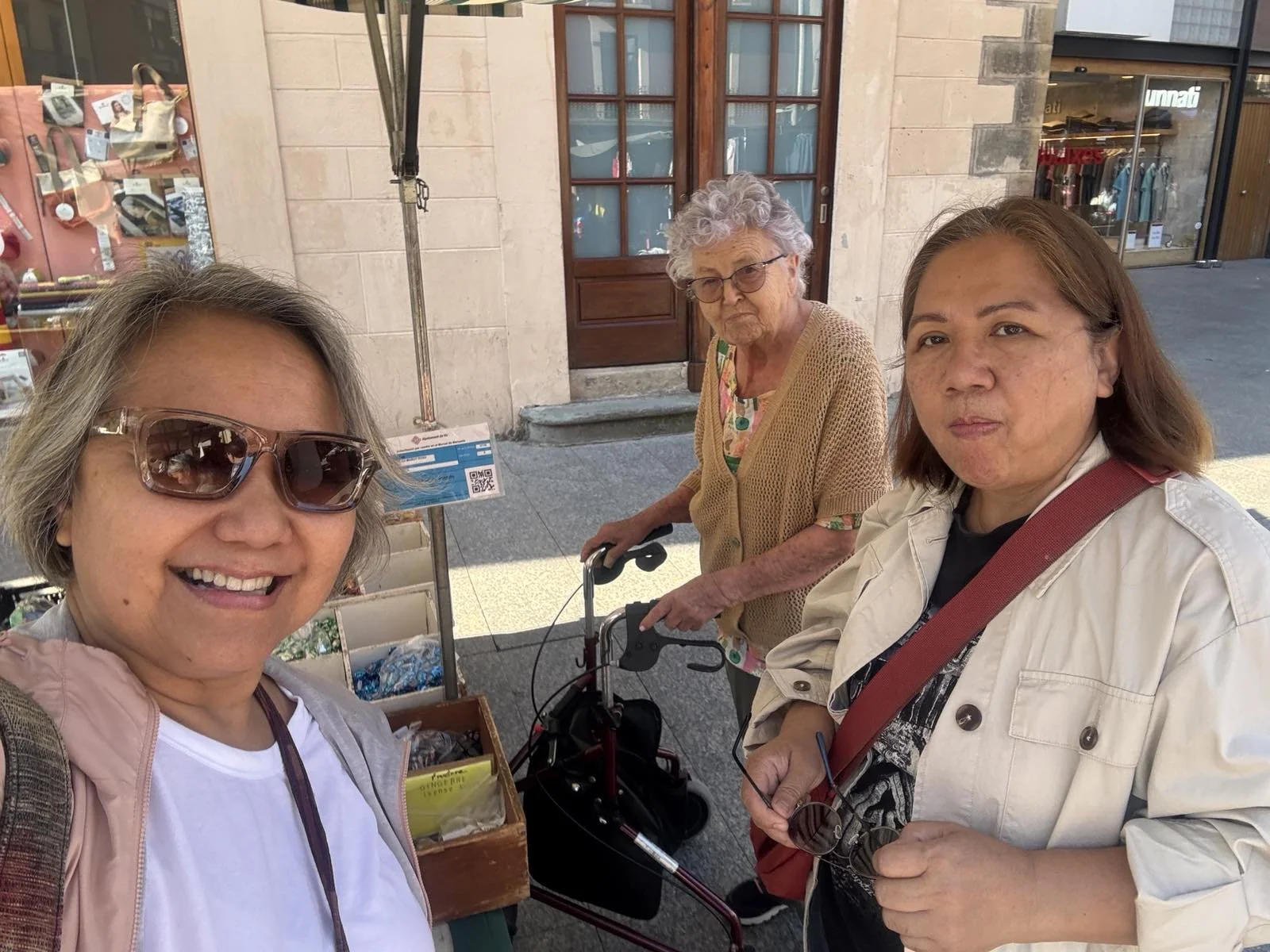
She spoke about having been in Catalonia for almost two decades as a nurse. When we parted ways, we said "Ingat ka" to each other. As we took a long look into each other's eyes, we knew she was going home to stay one of these days.
SO WHAT: The Statistics Behind the Faces
Erlinda and Myrna are not isolated stories. They are part of a decades-long narrative of resilience and sacrifice that continues to shape the Philippines today.
The Scale of the Diaspora
Over 33,000 Filipinos work in Spain, largely in Madrid, Barcelona, Malaga, the Balearic Islands, and Las Palmas. Work is concentrated in domestic work (housekeeping, caregiving), hospitality (restaurants, hotels), and increasingly in healthcare (nurses) and teaching.
But Spain is not even in the top 10 destinations. According to the Department of Migrant Workers (DMW) 2025 preliminary data, the top 10 land-based destinations are:
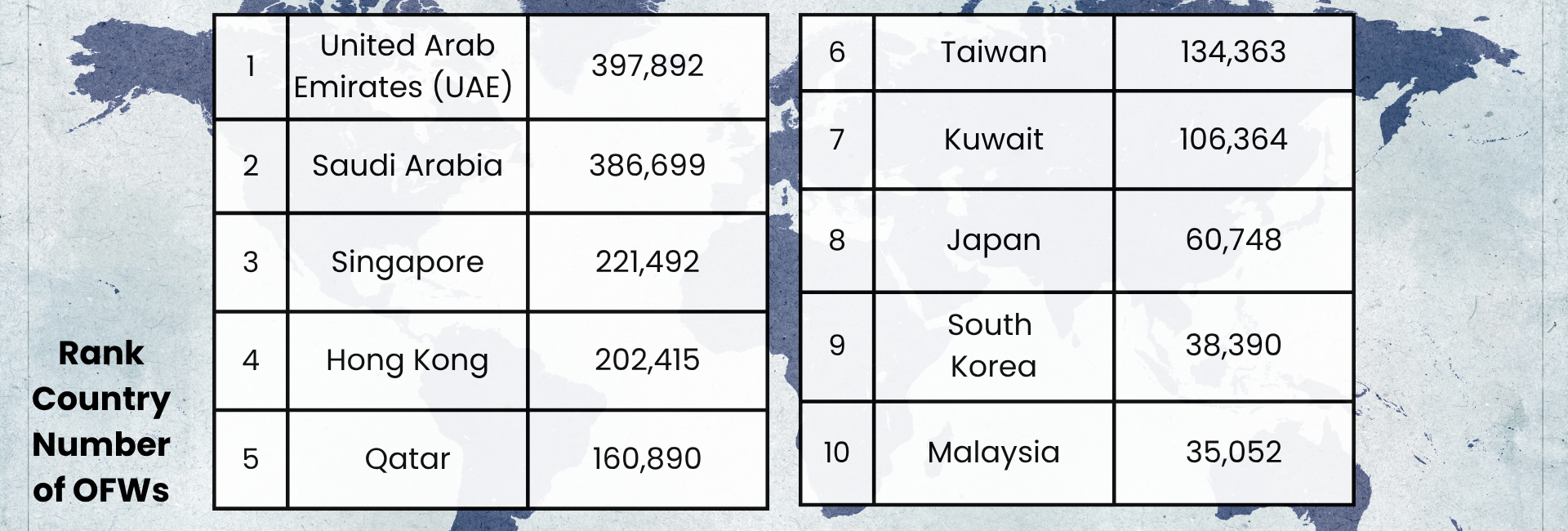
The United States remains home to the largest permanent Filipino diaspora—over 3.5 million.
The Gender Dimension
The face of labor migration from the Philippines is predominantly female.
In 2024:
· Women: 1.25 million (57.2%)
· Men: 937,000 (42.8%)
Among female OFWs, the vast majority—68.4% —are engaged in elementary occupations. This category includes domestic work, cleaning, and caregiving. These are roles that are often undervalued and underpaid both in the Philippines and in destination countries, yet they are the ones Filipino women take on to support their families.
The Domestic Jobs Crisis
The Philippine government's failure to provide adequate local employment is a decades-long structural issue, not just an economic accident.
· Wage vs. Living Cost Gap: A family of five needs about ₱1,312 a day to live decently, but the national average minimum wage is only ₱510 a day. This gap is the single most powerful push factor for migration.
· Underemployment: As of April 2026, 15.2% of workers were underemployed—meaning they already had jobs but still needed more hours or better-paying work to meet basic needs.
· Jobless Growth: The unemployment rate rose to 4.7% in April 2026. Economic think tank IBON Foundation described the picture as "an economy that is still not creating enough work, where available jobs do not provide enough income for families' basic needs."
· State-Sponsored Export: The government actively facilitates this exodus. As one political scientist noted, "They are going abroad because the government helps facilitate it via its state sponsorship of overseas employment."
Labor export has been official policy since the 1970s.
The Cost Borne by Families
The government's failure is measured in more than GDP figures. It is measured in the separation of families.
· About nine in ten OFW families depend on remittances for daily household expenses. This is not a choice; it is a survival strategy created by the lack of local alternatives.
· While remittances account for about 7.3% of GDP, this comes at the price of family fragmentation, emotional strain, and what one source calls the "social cost" of migration that is not captured in economic statistics.
The Enduring Trap
The government's reliance on labor export creates a vicious cycle. The steady flow of remittances—US$35.63 billion in cash remittances in 2025 alone—supports consumption and stabilizes the economy, which in turn reduces the urgency to implement the deep structural reforms needed to create competitive local industries.
The system "works" well enough to continue—but not well enough to stop.
NOW WHAT: What I Will Do—And What You Can Do
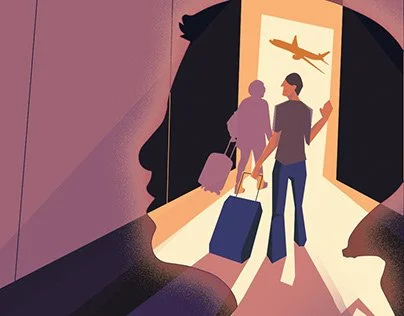
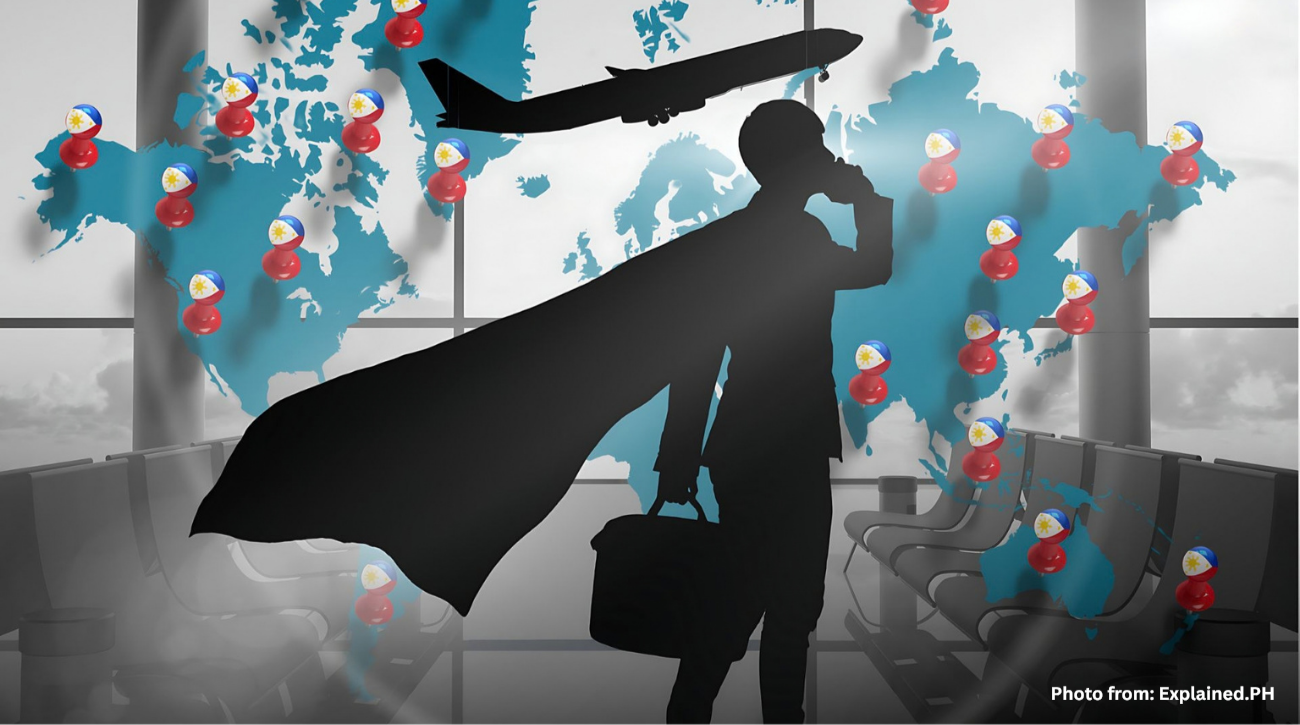
Filipino OFWs are strong, sturdy, agile starlings that continue to protect their families, risking life, limb, and heartache to ensure their loved ones survive and thrive.
They did not and do not rely on the Philippine government for their thriving. We are chosen over other nationalities for our gentle nature and facility in the English language.
And I will do everything within my power to let the world know how proud I am of them.
Here is my commitment and invitation to you.
1. See Them. Thank Them.
· Action: The next time you encounter an OFW—on a plane, in a market, in your own family—look them in the eye. Ask "Kamusta ka?" and mean it. Thank them for their sacrifice.
· Why: They carry the weight of our economy on their backs. The least we can do is witness them.
2. Tell Their Stories
· Action: Share Erlinda's story. Share Myrna’s story. Write about them. Speak about them. Amplify their voices.
· Why: Their stories are the truth behind the statistics. When we tell them, we humanize the data and honor the sacrifice.
3. Demand Better from Our Government
· Action: Ask your elected officials: "What is your plan to create decent, living-wage jobs in the Philippines?" Hold them accountable.
· Why: Labor export is not a solution. It is a symptom of a deeper failure. Until we address the root causes, the exodus will continue.
4. Support Reintegration Programs
· Action: Support organizations that help returning OFWs reintegrate—with financial literacy, skills development, and mental health support.
· Why: Many OFWs return home to uncertain futures. We owe them more than a hero's welcome.
5. Practice the Coaching Stance—With Yourself and Others
· Action: Pay total attention. Listen actively. Stand in inquiry. Assume positive intent.
· Why: These are the skills that allow us to connect across differences—to see the “kapwa” in every person we meet, whether they are from Madrid, Vic, or our own neighborhood.
I close with the words of the PIDS study that captures the heartbreak of this phenomenon:
"Napakasakit, Kuya Eddie!"
It is painful. The separation. The sacrifice. The families left behind.
But it is also heroic.
Erlinda. Myrna. The 1.25 million women and the millions of men who leave home so their families can survive.
They are not statistics. They are our kapwa Kababayan. They are our heroes. They are our starlings—flying together, adapting, surviving, thriving.
And I will never stop telling their story.
🌷🌷🌷🌷🌷
-Susan Grace Rivera
Posted on: September 21, 2026