WOWWBLOG #66: The Storm Outside, the Stillness Within: Why Presence Is the Ultimate Rebellion in an Age of Distraction
How four days of leadership, ministry, and medicine taught me that the greatest gift we can give anyone is our undivided attention
WHAT: A Stormy Week, Four Sacred Containers
This week has been rainy and stormy—weather-wise. But it was also one of the most important weeks this August.
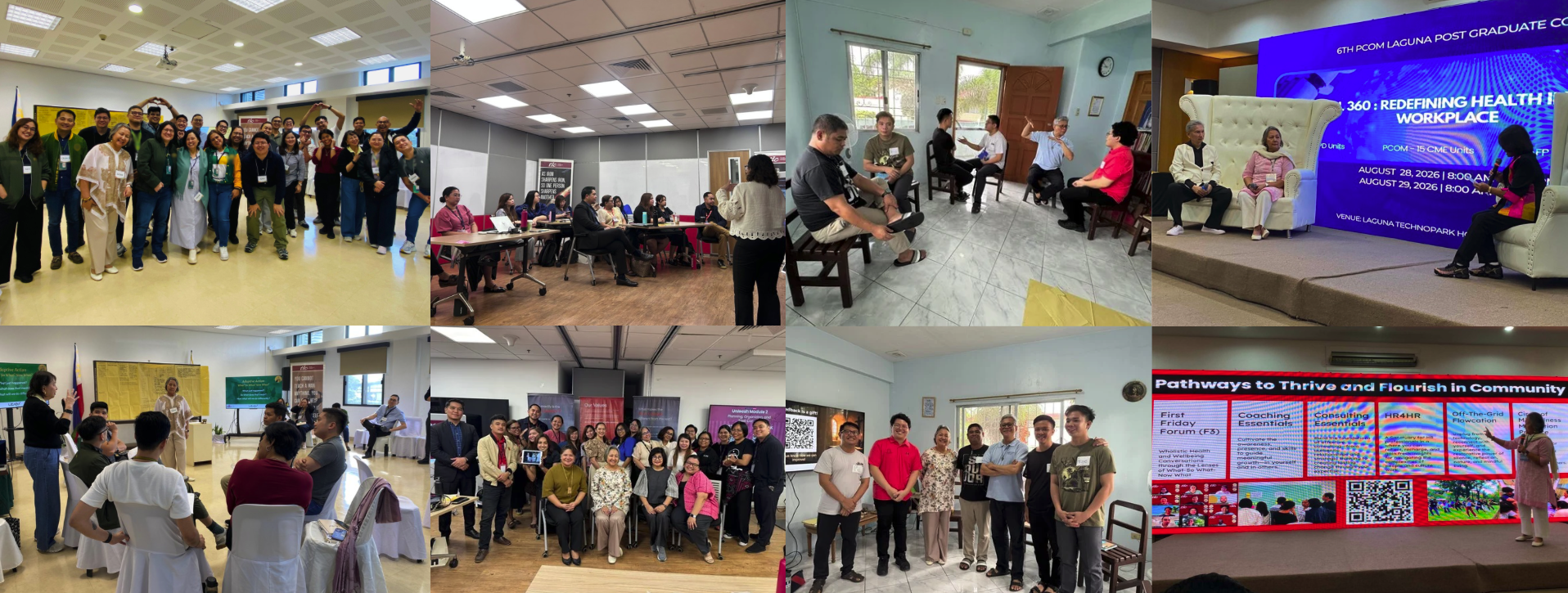
Four whole days of Learning, Development, and Growth (LDG) experiences with four distinctly different sets of participants:
1. Senior leaders of a top educational institution — focused on "Leading with Accountability."
2. First-line and middle managers of a global risk management, insurance, and human capital consulting firm — focused on "Planning, Organizing, and Task Control."
3. Seminarians from two religious congregations — whose formation director requested a facilitation on the practices of Centering Prayer and Mindfulness Meditation.
4. Doctors and healthcare professionals of the Philippine College of Occupational Medicine — where I was invited to speak on "Coaching, Mindful Movement, and Wholistic Wellbeing in the Modern Workplace."
Four contexts. Four containers. One question asked of all of them: "What stood out for you?"
And the answer, across all four groups, was the same.
Presence. Mindfulness. The quiet gift of showing up fully.
SO WHAT: The Anatomy of Presence
Their contexts were so distinct: education, risk management, seminary formation, occupational medicine. And yet the common denominator was a deeper appreciation of presence.
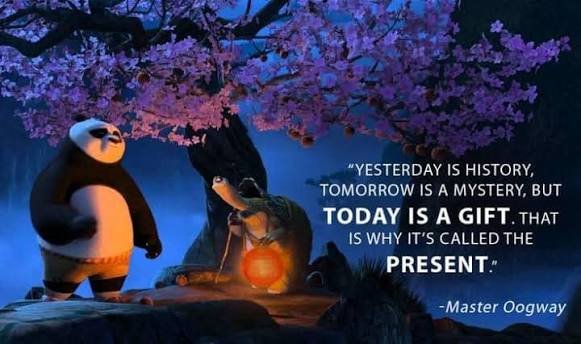
Is presence the ultimate antidote to the modern "attention economy"? In a world where notifications, algorithms, and constant connectivity fracture our focus, deep presence has become a rare and valuable superpower.
What is Presence?
Presence can be understood through three core layers:
· The Scientific Definition: A neurological state of being locked into the "here and now." It occurs when the brain's Default Mode Network (DMN) —responsible for mind-wandering, worrying about the future, and obsessing over the past—quiets down, allowing task-positive networks to take over.
· The Psychological Definition: A state of high situational awareness and emotional availability. Experiencing the current moment objectively, without judgment or the need to immediately react.
· The Experiential Definition: The feeling of alignment where your physical body, your active mind, and your emotional awareness are all occupying the exact same space at the exact same time.
Four Lenses on Presence
The Psychological & Neurological Lens
Presence alters the brain and reduces stress. Chronic distraction triggers low-level anxiety. Presence lowers cortisol and activates the parasympathetic nervous system—the "rest and digest" mode. Mihaly Csikszentmihalyi called the peak manifestation of presence “flow”—where self-consciousness vanishes entirely.
The Spiritual & Philosophical Lens
For thousands of years, traditions have studied this state. Suffering arises from resisting the present moment. The Buddhist concept of Sati (mindfulness) and the Stoic practice of Prosochê (continuous attention to the present) both point to the same truth. Eckhart Tolle frames the "Now" as the only true reality that exists.
The Professional & Leadership Lens
Presence drives success. Multitasking is a myth; it is rapid "task-switching" that drains cognitive energy. Executive Presence—the ability to command a room, deeply listen, and make critical decisions—is not about charisma. It is about being fully there, device-free, undistracted.
The Relational Lens
Presence rescues our human connections in the AI era. The greatest gift one can give in the 21st century is undivided attention. "Phubbing" (phone-snubbing) ruins relationships. True presence builds deep empathy, trust, and intimacy. In fact, it is this intimacy that evolves vocal prayer from conversation to communion with God—as I explained to the seminarian group.
Why Presence Matters Now
The "Attention Economy" has made focus a commodity. Tech companies harvest human attention and sell it to advertisers. I, in fact, celebrate Meta’s USD17.1B penalty having lost a class action suit filed by 29 American states against Facebook and Instagram who keep children addicted to social media! Reclaiming our attention is an act of rebellion and personal sovereignty. When our attention is fractured, we lose the capacity for deep thought, critical thinking, and long-term memory. We become easily manipulated by outrage and clickbait.
But a person who can sit quietly, read a book, hold a deep conversation, or work deeply for hours possesses a massive competitive advantage. Presence is no longer just a wellness trend. It is a critical survival skill.
NOW WHAT: How to Know You Are Fully Present
You measure presence by tracking subtle signs in yourself:
· Body signals: A steady heart rate. Slow, deep breathing. A calm and grounded nervous system.
· Attention span: Fewer distractions. Less mind-wandering to the past or future.
· Engagement: Deep listening. Noticing your surroundings without reaching for a phone.
How do you know you are fully present?
· Quiet mind: The constant inner chatter stops or fades into the background.
· Heightened senses: Colors look sharper. Sounds feel clearer. You feel the floor beneath your feet.
· Time distortion: Minutes stretch out. Time seems to disappear because you are not rushing ahead.
· Deep calm: Your body feels relaxed. No urge to escape the current moment.

Your Call to Action: Three Practices for Cultivating Presence
1. The "Phone-Free" Check-In (5 minutes)
2. The "One Minute of Listening" Practice
3. The "End-of-Day Presence Audit"
You do not need a full day retreat or a silent meditation course. You need small, intentional acts of return.
1. The "Phone-Free" Check-In (5 minutes)
· Action: Before your next meal or meeting, place your phone face-down or in another room. Take five conscious breaths. Feel your feet on the floor. Notice the person in front of you.
· Why: The first act of presence is the decision to stop dividing your attention. This small ritual rewires your nervous system for connection.
2. The "One Minute of Listening" Practice
· Action: In your next conversation, commit to one minute of listening without planning your reply. No interrupting. No mentally rehearsing. Just receive.
· Why: Listening is the most underrated leadership skill. It is also the most powerful way to make another person feel seen.
3. The "End-of-Day Presence Audit"
· Action: At the end of each day, ask yourself three questions:
· Where was I fully present?
· Where was I distracted?
· What was one moment I wish I had shown up more fully?
· Why: Reflection reinforces awareness. Awareness deepens presence.
4. Join Our Sangha
· Action: If you are longing for a container to practice presence with others, join our Circle of Mindfulness Meditation Practice (COMMP) every Friday, 7:30–8:30 PM. No experience needed. Just come as you are.
. Another opportunity is our upcoming “4-day Off-the-Grid (OTG) sojourn in Mirador Jesuit Villa & Retreat house, Baguio City from October 7 to 11, 2026 (https://www.thetlcsolution.com/off-the-grid-flowcation).
· Why: Presence is not a solo endeavor. It deepens in community, where we hold each other accountable to the practice of showing up.

As the storm raged outside this week, we created sanctuaries of stillness inside. Leaders, managers, seminarians, and doctors all named the same gift: presence.
It is not a luxury. It is not a soft skill. It is the foundation of everything worth building. And it begins with a single breath, a single pause, a single moment of undivided attention.
🌷🌷🌷🌷🌷
-Susan Grace Rivera
Posted on: August 30, 2026