WOWWBLOG #59: The Inner Compass and the Superpower Within: What Mindful Leadership Taught Me About Navigating Complexity
How the STOP and RAIN frameworks, IDG, and the awareness of being aware helped me—and my clients—find calm in chaos
WHAT: The Awareness of Being Aware
This week, I noticed something unusual. I was mindful about being mindful. And somehow, I found myself in a happy and peaceful state—not because of anything external, but simply because I was aware that I was aware.
I felt body sensations more vividly. I noticed moments of complete exhaustion—my internal battery blinking red, my whole body crying out for rest. Eyes drooping. Legs almost tripping. Aches of all shapes and intensities manifesting. But instead of resisting, I simply observed. I was present to the exhaustion without being consumed by it.
This is what I call coherence—where everything falls into place, not because the external world is perfect, but because my internal world is aligned.
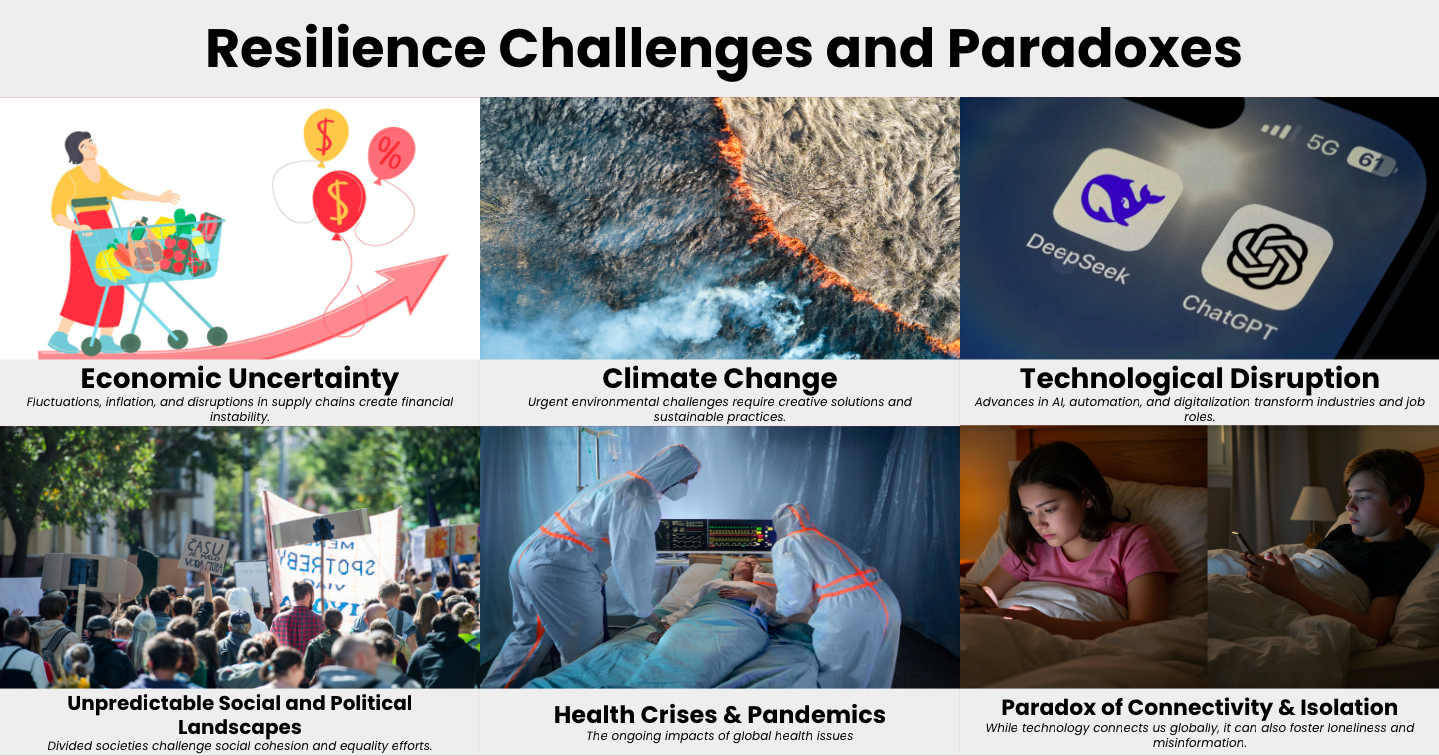
In one segment of the Mindful and Adaptive Leadership program, a long-term development experience my team and I co-create with a client, I showed photos of the poly-crises unfolding in the world right now. I asked participants to reflect on each image, choose one that resonated, and describe the causes and effects that have impacted their lived experience.
At first, the sharing remained conceptual. But with gentle probing, a few participants allowed themselves—in the safety of our shared container—to describe their lived experience. They named the remnants still held in their bodies. They described how those remnants can be triggered by events that feel similar.
And something remarkable happened. Naming the experience down to the somatic level was liberating. It brought back a sense of agency. A sense of safety in spaciousness. The ability to choose wisely what will serve best in the present moment.
This is the heart of Mindful Leadership, which I introduced to them using the framework from the slides I shared.
Mindful Leadership is not about being the loudest voice in the room. It is about:
· Power with Presence: Paying close attention, rising above pettiness and ego, seeing the bigger picture, and speaking up with a respected voice.
· Creating High-Performing Teams: Fostering psychological safety and loyalty, inspiring people to give their best by making them feel cared for, appreciated, and affirmed.
· Navigating Stress Peacefully: Actively fostering inner peace and well-being while walking through challenges with the self-mastery you have nurtured.
We explored the four C's of Mindful Leadership that live at the center of this practice:
· Compassion: Seeing others with love and kindness, acting with grace.
· Connectivity: Recognizing that each person is needed and has potential—our interconnectedness.
· Caliber: Getting the job done with the highest quality and care, fostering a sense of calm and confidence in people.
· Curiosity: Being open-minded, suspending judgment, seeking to understand, asking powerful questions.
SO WHAT: The Inner Compass and the Superpower Within
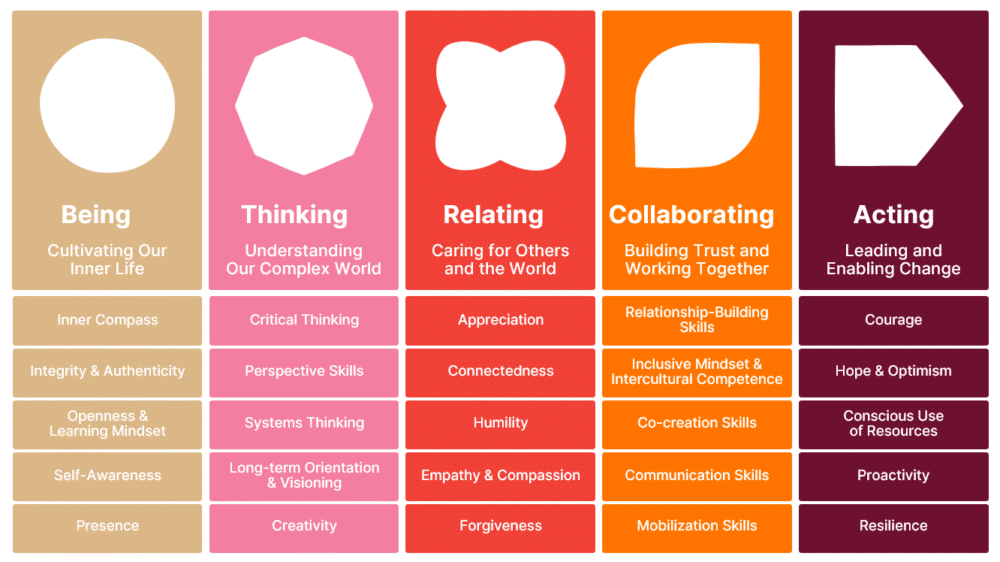
During the session, I also introduced the Inner Development Goals (IDG) framework, for which our firm, The TLC Solution, serves as the Philippine Hub.
The IDG framework embodies the principle that inner growth is a prerequisite for sustainable outer change. It offers a common language that connects personal transformation to systemic transformation—from self-awareness to societal well-being.
We explored the dimensions of IDG:
· Being: Presence, integrity, self-awareness.
· Thinking: Critical thinking, complexity awareness, perspective-taking.
· Relating: Empathy, compassion, appreciation.
· Collaborating: Co-creation, trust, mobilization.
· Acting: Courage, optimism, perseverance.
These are not soft skills. They are essential, measurable drivers of leadership performance in any organization.
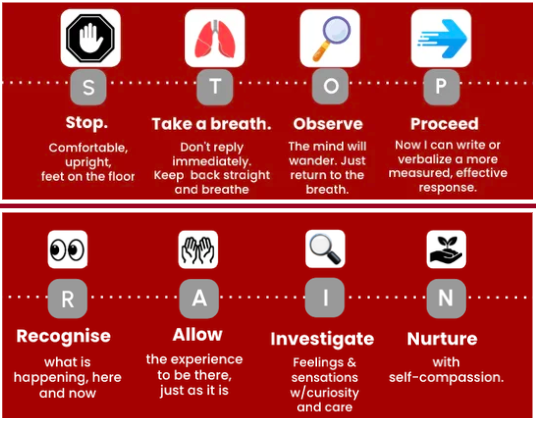
We practiced two tools that support this inner work:
Tool #1: The STOP Framework
· Stop: Comfortable, upright, feet on the floor.
· Take a Breath: Don't reply immediately. Keep back straight and breathe.
· Observe: The mind will wander. Just return to the breath.
· Proceed: Now I can write or verbalize a more measured, effective response.
Tool #2: The RAIN Framework
· Recognize what is happening, here and now.
· Allow the experience to be there, just as it is.
· Investigate feelings and sensations with curiosity and care.
· Nurture with self-compassion.
These tools are not just for the workshop. They are for life. They are for the moments when complexity feels overwhelming, when the poly-crises of our time—economic uncertainty, climate change, technological disruption, unpredictable social and political landscapes—press in from all sides.
The leaders I work with are navigating massive cognitive loads: constant reactivity, competing demands, information overload, and the relentless pace of change. The core question I posed to them—and to myself—was this:
"As complexity increases, what is YOUR capacity to navigate it?"
NOW WHAT: The Revolution of Giving Freely
This brings me to something I have been practicing quietly, without fanfare.
In the TLC Circle of Mindfulness Meditation Practice (COMMP), which meets weekly on Fridays from 7:30 to 8:30 PM, I offer what I call "Companioning Conversations."
A member simply books a half-hour slot. They bring their full presence into a safe, sacred conversation. I do not coach. I do not advise. I do not problem-solve. I simply offer undefended presence. I hold space. I listen. I witness.
I do not charge for this. I do not accept payment. It is offered freely, as an act of Dana.
What Is Dana?
Dana is a Sanskrit and Pali word meaning generosity, giving, or charity. In Buddhist tradition, it is far more than a transaction. It is a spiritual practice, an ethical virtue, an economic feature, and a subject of deep inquiry.
· A Gift of the Heart: Dana is giving freely, motivated by compassion and goodwill, without expecting anything in return. It is about opening the heart to give according to one's means, not according to a fixed price.
· Cultivating Generosity: The practice is meant to release stinginess, clinging, and self-interest. It cultivates an inner spirit of generosity (caga).
· A Source of Joy: The joy of giving is emphasized—the act ideally brings delight before, during, and after the giving.
· A Foundational Virtue: In Buddhism, Dana is the first step on the path to enlightenment and the first of the perfections (paramitas) that a Bodhisattva cultivates.
How Dana Transforms the Relationship
In a standard paid service, the relationship is contractual and transactional. Dana fundamentally alters this dynamic.
· Rooted in Interdependence: It acknowledges mutual connection, creating a circular movement of goodwill. Both giving and receiving are part of a single, interconnected act.
· Built on Trust: The exchange is based on compassion rather than price, fostering a deep personal bond.
· Non-Transactional: The giver gives freely without expectation. The receiver accepts without debt. The relationship is guided by gratitude and mutual respect.
· An Act of Mutual Growth: Both parties benefit—the giver cultivates generosity, and the receiver learns to receive graciously.
When I offer Companioning Conversations as Dana, something shifts:
· The recipient is no longer a "client" buying a service, but a person receiving support within a human relationship.
· The service is offered in response to need, not because a fee has been paid.
· The model is inclusive—accessible to everyone, regardless of ability to pay.
· The relationship is built on trust, shared humanity, and compassion.
And here is the beautiful paradox: in giving freely, I feel I am the first to benefit.
Your Call to Action: Three Practices of Mindful Generosity
You do not need to be a member of any organized religion to practice Dana. You do not need to be spiritual at all. Although it somehow emerges effortlessly. The principle is universal: giving freely changes the giver as much as the receiver.
1. Practice the STOP Framework in One Moment of Pressure This Week
· Action: The next time you feel overwhelmed, pause. Stop. Take a breath. Observe what is happening in your body. Then proceed—not reactively, but with intention.
· Why: This small pause creates space between stimulus and response. It is the foundation of mindful leadership.
2. Offer One Act of Undefended Presence
· Action: Identify someone in your life who needs to be heard—not fixed, not advised, just heard. Offer them 30 minutes of your full, undivided attention. No agenda. No advice. Just presence.
· Why: The greatest gift you can give is your full attention. It says: "You matter. Your experience matters. I am here."
3. Reflect on Your Inner Compass
· Action: Take five minutes to sit quietly. Ask yourself: "What is my inner compass pointing toward right now? Am I aligned with my values? Where am I out of alignment?"
· Why: The IDG framework reminds us that inner growth is the foundation for outer change. Knowing your inner compass helps you navigate complexity with clarity and courage.
A Closing Reflection
As I write this, I am aware of my own exhaustion. The body still aches. The internal battery still blinks. But I am also aware of something else—a quiet, steady peace beneath the fatigue.
This is what mindful awareness does. It does not eliminate suffering. It changes our relationship to it. It creates spaciousness where there was constriction. It opens the door to choice.

And when we extend that same spaciousness to others—without expectation, without payment, without agenda—we participate in something sacred. We become part of a cycle of generosity that has been practiced for millennia.
This is the gift of giving without measure. It is the practice of Dana.
And it is available to all of us, right here, right now.
-Susan Grace Rivera
Posted on: July 12, 2026